
How Swim Academies Track Progress: A Parent's Guide
- superheroswim
- Jun 11
- 7 min read


Swim academies track progress through structured, mastery-based skill assessments combined with digital monitoring tools that give parents real-time visibility into their child’s development. At Superheroswimacademy and programs like it, this means far more than a thumbs-up after class. It means criterion-based checklists, scheduled evaluations, attendance records, and parent portals working together to show exactly where a child stands and what comes next. Understanding how swim academies track progress helps you ask the right questions before enrolling and recognize genuine learning when you see it.
How swim academies track progress: the core methods
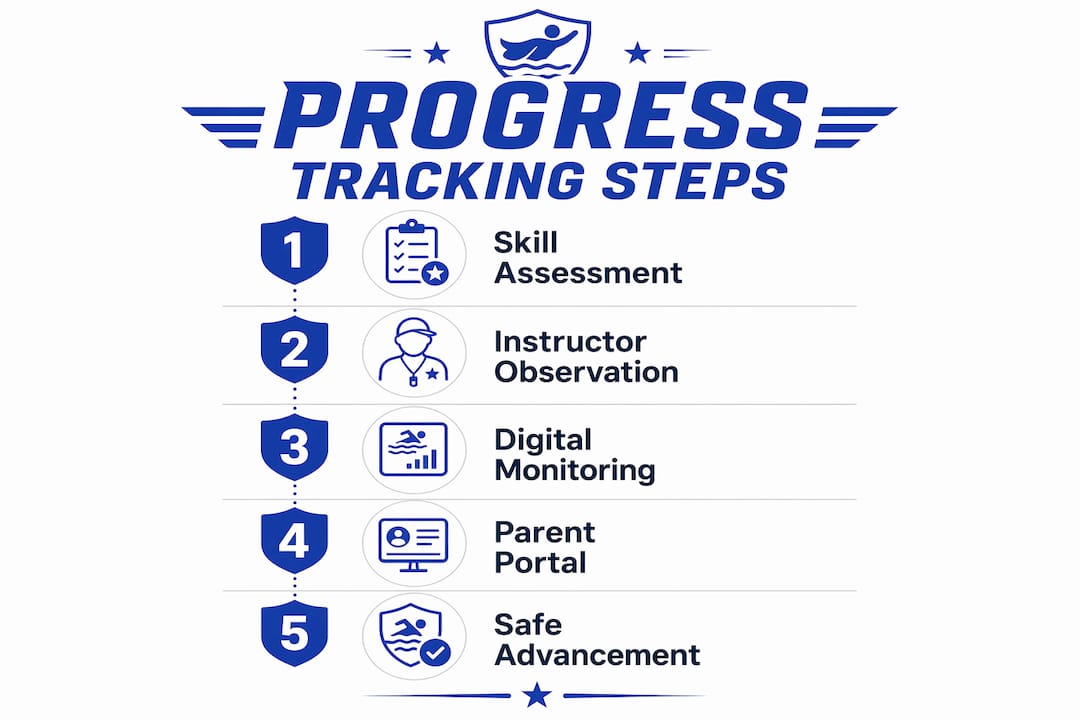
Swim progress assessment starts with skill-level checklists. Instructors record whether a child has mastered each specific skill at their current level, from floating independently to executing a proper freestyle arm stroke. These checklists are not subjective impressions. They are detailed, criterion-based records that define exactly what “mastered” looks like for every skill at every level.
The most widely used assessment model in swim academies relies on three components working together:
Skill checklists: Instructors mark each skill as not yet attempted, in progress, or mastered. A child must demonstrate a skill consistently before it is recorded as complete.
Scheduled evaluations: Most programs conduct formal assessments on a monthly or bi-monthly cycle. Criterion-based assessments determine advancement, not the number of classes attended. This matters because two children in the same class for the same number of weeks may be at completely different readiness levels.
Mastery standards: A three-star rating model used by many programs requires confident, consistent, and independent skill execution before a child advances. Performing a skill once with coaching does not qualify.
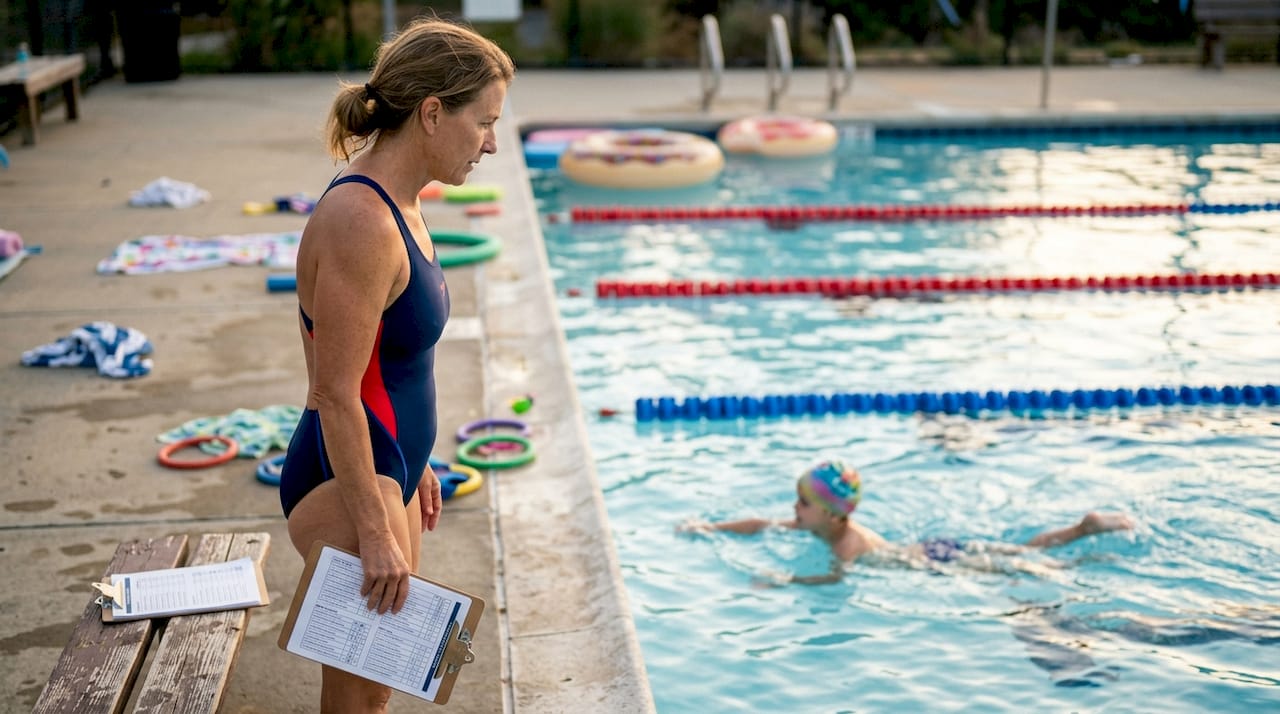
Instructor observation runs through all three components. A trained instructor watches for technique, confidence, and independence during every class, not just on formal assessment days. This continuous monitoring means the formal evaluation is a confirmation of what the instructor already knows, not a surprise test.
Pro Tip: Ask your swim academy to show you the specific skill checklist for your child’s current level. If they cannot produce one, that is a sign the program lacks the structured tracking that supports real learning outcomes.
How do digital tools and parent portals improve progress transparency?
Digital platforms have changed how parents experience their child’s swim education. Instead of waiting for a verbal update after class, parents now access real-time data through dedicated portals. Platforms like MemberSplash, DigiQuatics, and iClassPro each approach this differently, but all three give parents direct visibility into skill records, attendance history, and instructor feedback.
Here is what a well-built parent portal typically includes:
Digital skill trees: A visual map of every skill at every level, showing which are complete, in progress, or not yet started. Parents see the full picture, not just a summary.
Automated report cards: DigiQuatics sends PDF report cards to parents automatically after sessions, including attendance data and progress notes. This removes the communication gap that used to exist between instructor and parent.
Attendance integrated with skill progress: MemberSplash and SimplySwim combine attendance records with skill tracking inside the same portal. When a child appears to plateau, the attendance data often explains why. A child who missed four classes in a month has not stalled. They have simply had fewer practice opportunities.
Instructor comments: Written notes from the instructor give context that numbers alone cannot provide. A comment like “Maya is close on backstroke but loses body position at the turn” tells a parent far more than a progress percentage.
Digital progress tracking platforms reduce parental confusion about swim development by making the criteria visible and the data accessible. Parents who understand what their child is working toward are more engaged, and that engagement supports better outcomes at home and in the water.
Pro Tip: Log into your academy’s parent portal before each class, not just when you receive a report card. Checking attendance patterns alongside skill progress gives you a much clearer picture of your child’s actual learning trajectory.
How do swim academies incorporate water safety into progress evaluations?
Monitoring swim skills means more than tracking strokes and kicks. Serious swim programs evaluate water safety knowledge and emergency response alongside technical ability. This is where progress tracking connects directly to a child’s physical safety, not just their athletic development.
A structured water safety assessment typically covers these components in sequence:
Knowledge evaluation: Children are assessed on their understanding of pool rules, safe entry and exit, and what to do if they or someone else is in distress. This is tested verbally or through scenario-based questions appropriate to the child’s age.
Technical skill execution: Instructors assess stroke technique, breathing control, floating endurance, and underwater skills. Each is evaluated independently, not as part of a general impression.
Simulated real-world scenarios: Programs modeled on frameworks like SwimSafer 2.0 require competency across all three components before a child advances. A child who swims beautifully but panics in an unexpected situation has not met the standard. This approach ensures a swimmer is genuinely competent, not just exposed to skills.
Confidence and composure assessment: Instructors observe how a child responds to unexpected challenges in the water, including simulated distress scenarios. Composure under pressure is a measurable skill, and it belongs in any serious evaluation.
Certified instructors are the foundation of this process. You can read more about why instructor qualifications matter for accurate and safe progress evaluation. An instructor without formal safety training cannot reliably assess a child’s readiness for real-world water environments. Broader water safety education, including resources from organizations like Safe Boating America, reinforces why layered safety knowledge is the standard in aquatic education.
How do swim academies ensure fairness and consistency in advancement?
Consistency in tracking swimming performance comes from standardized criteria applied the same way by every instructor, every session. Without this, two children with identical skills could receive different assessments depending on who taught their class that week. Reputable programs prevent this through structured evaluation schedules and mastery gating.
The table below shows how mastery-based advancement differs from time-based advancement:
Factor | Mastery-based advancement | Time-based advancement |
Promotion trigger | All required skills demonstrated consistently | Fixed number of classes completed |
Partial skill completion | Delays promotion until full mastery | May still result in level change |
Missed assessments | Wait for next scheduled cycle | No impact on timeline |
Parent visibility | Specific skill gaps identified | General level or grade reported |
Safety outcome | Child is ready for next challenge | Child may be placed beyond their ability |
Promotion is gated on mastering every required skill, not averaging across skills. A child who has mastered eight out of ten required skills has not mastered the level. This is not a punitive standard. It is a safety standard. Moving a child into deeper water or more complex techniques before they are ready creates real risk.
Missed assessments follow a clear rule in structured programs. A swimmer who misses their scheduled evaluation waits until the next assessment cycle. Make-up opportunities may exist but are limited. Parents who understand this in advance avoid frustration when a child’s advancement appears delayed. The delay is not a judgment. It is the system working as designed. Learning about swim coordination development can also help parents understand why some skills take longer to consolidate than others.
Key takeaways
Swim academies that use mastery-based, criterion-driven assessments combined with digital parent portals produce safer, more confident swimmers than programs that rely on time-based advancement alone.
Point | Details |
Mastery over time | Advancement requires consistent, independent skill execution, not class attendance duration. |
Digital portals add clarity | Platforms like MemberSplash and DigiQuatics give parents real-time access to skill records and attendance data. |
Safety is assessed, not assumed | Water safety knowledge and simulated scenarios are evaluated alongside technical swim skills. |
Missed assessments delay advancement | Structured programs require waiting for the next cycle, which protects fairness and accuracy. |
Instructor quality determines accuracy | Certified instructors with formal safety training produce reliable, consistent evaluations. |
What I’ve learned from tracking over 2,500 children’s swim progress
After working with more than 2,500 children at Superheroswimacademy, the pattern I see most often is this: parents who understand the tracking system trust it, and parents who trust it stay consistent. Consistency is what produces results.
The biggest mistake I see parents make is interpreting a delayed advancement as a problem with the child. It almost never is. When a child is not advancing, the data usually points to one of three things: inconsistent attendance, a specific skill that needs more targeted practice, or a readiness issue that the mastery standard correctly identified. The tracking system is doing its job in all three cases.
I am also direct about this: a swim program that cannot show you a detailed skill checklist, a scheduled assessment calendar, and a parent portal with real data is not tracking progress in any meaningful way. A verbal “she’s doing great” after class is not a progress report. It is a pleasantry. Parents deserve more, and children’s safety depends on more.
The programs I respect most treat swimming lesson evaluations as a continuous process, not a quarterly event. Every class generates data. Every instructor observation feeds the record. When you combine that with digital tools that make the data visible and accessible, you get a system where nothing falls through the cracks and every child gets the attention their development requires.
— SUPERHERO
See how Superheroswimacademy tracks your child’s progress
Superheroswimacademy uses a structured, mastery-based tracking system built around detailed skill checklists, scheduled evaluations, and direct parent communication. Every instructor at Superheroswimacademy holds CPR and First Aid certification and is trained in the academy’s own survival swim curriculum, so the assessments your child receives are conducted by professionals who know exactly what safety-ready looks like. Parents receive regular progress updates and have clear visibility into their child’s skill development at every stage. If you are ready to enroll your child in a program where progress is measured, communicated, and taken seriously, explore swim lessons in Palm Beach and Broward or find the nearest Superheroswimacademy location to get started.
FAQ
How do swim academies measure a child’s swim improvement?
Swim academies measure improvement through criterion-based skill checklists where instructors record whether each specific skill is mastered consistently and independently. Advancement is based on meeting every required standard at a level, not on time spent in class.
What digital tools do swim academies use for progress tracking?
Platforms like MemberSplash, DigiQuatics, and iClassPro give parents access to digital skill records, attendance history, and automated report cards through parent portals. These tools make it possible to see exactly which skills are complete, in progress, or not yet started.
Why does my child’s swim advancement sometimes take longer than expected?
Advancement is gated on mastering all required skills at a level, so partial completion delays promotion. Missed assessments also require waiting for the next scheduled evaluation cycle, which can affect the perceived timeline without reflecting any issue with the child’s ability.
How is water safety included in swim progress evaluations?
Structured programs assess water safety knowledge, technical skill execution, and simulated emergency scenarios as separate components. A child must demonstrate competency in all areas before advancing, not just in stroke technique.
How often do swim academies conduct formal progress assessments?
Most programs schedule formal assessments on a monthly or bi-monthly cycle. Continuous instructor observation happens every class, but formal evaluations that determine advancement follow a fixed schedule to maintain consistency and fairness across all students.
Recommended
Comments