
In-Home Lesson vs Public Pool: Best Swim Options for Kids
- superheroswim
- Jul 20
- 8 min read

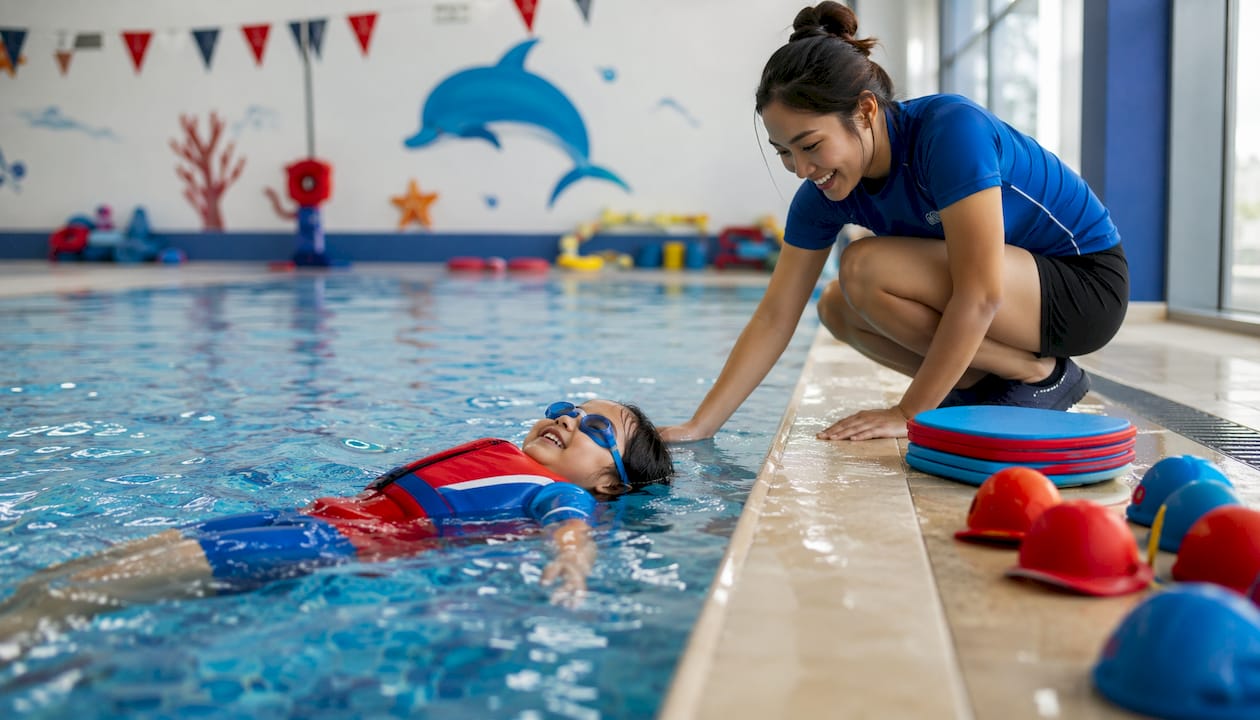
In-home swim lessons provide private, one-on-one instruction in a familiar setting, while public pool classes offer structured group learning at a lower cost per session. The in home lesson vs public pool comparison comes down to four factors: price, environment, teaching approach, and your child’s temperament. Formal swim lessons reduce drowning risk by 88% for children ages 1–4, according to data cited by the American Academy of Pediatrics. That statistic makes the choice of which lesson format to use far less important than the choice to enroll consistently. Superheroswimacademy has taught over 2,500 children in Palm Beach and Broward counties, and the pattern is clear: the right setting is the one your child will actually attend every week.
1. How do costs and scheduling compare between the two options?
Price is the most immediate difference in any home swim instruction vs. public pool comparison. In-home lessons cost $51–$85 per session, while public group lessons range from $5–$45 per session depending on the facility and location. Over a full year, that gap can exceed $1,500–$2,500 per child when comparing mobile instructor costs to community pool programs.
Scheduling flexibility is where in-home lessons earn their premium. A mobile instructor comes to your backyard pool at a time you choose, which removes the commute and the scramble to arrive before class starts. Public pool programs run on fixed schedules, and popular time slots fill fast, especially in summer.
In-home lessons: $51–$85 per session, flexible scheduling, no travel required
Public group lessons: $5–$45 per session, fixed class times, travel to facility required
Annual cost gap: Private instruction can cost $1,500–$2,500 more per child per year
Sibling savings: Some mobile instructors offer sibling discounts that reduce the per-child cost
Pro Tip: Many YMCA locations offer financial assistance through their Open Doors program, which can make community pool lessons nearly free for qualifying families. Call your local branch before assuming public lessons are out of reach.
2. What environmental and facility differences affect young children?
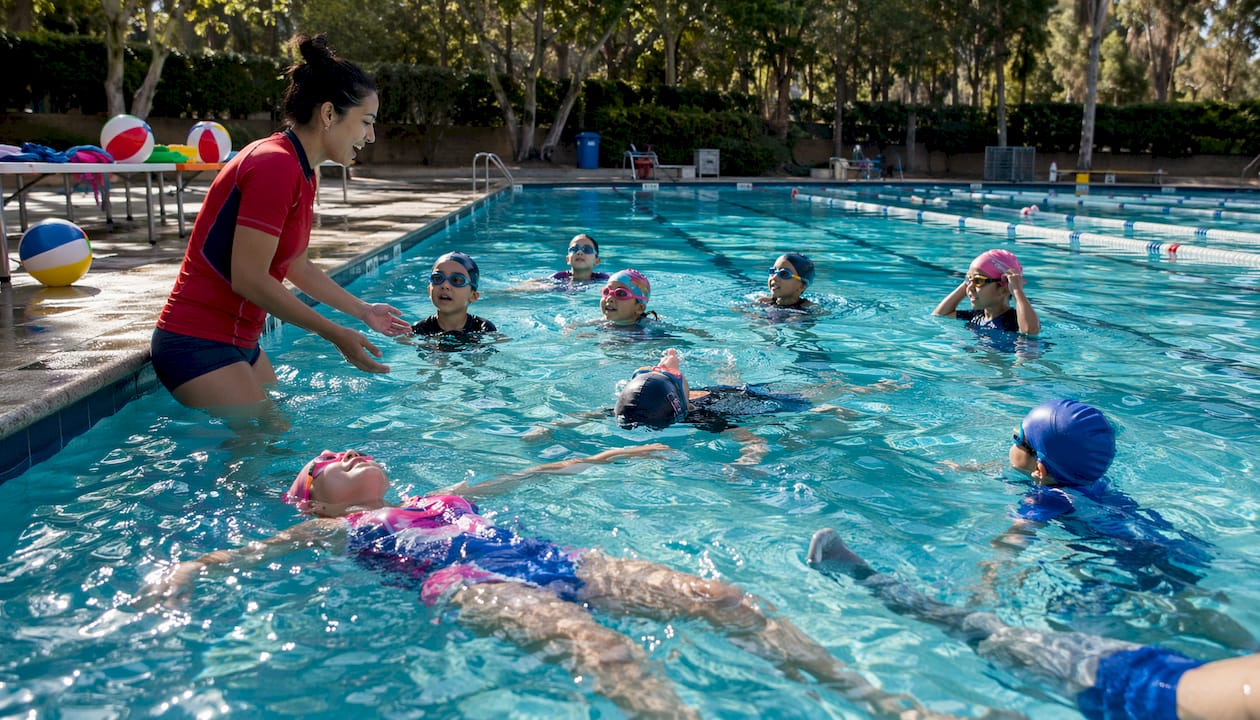
Water temperature is the most underrated factor in this comparison, and it hits hardest for infants and toddlers. Private swim schools maintain pools at 88–92°F, while typical public pools run at 78–82°F. A 10-degree difference sounds small, but cold water causes young children to tense up, fatigue faster, and disengage from instruction.
Warm water keeps toddlers relaxed and focused. Small instructor-to-child ratios combined with warm pools produce measurably better comfort and progress for anxious or very young children. In-home lessons in a heated backyard pool often replicate these conditions naturally.
Private or in-home pools: 88–92°F, familiar surroundings, minimal distractions
Public pools: 78–82°F, shared lanes, louder environment, variable deck space
Lifeguard coverage: Public pools have certified lifeguards on deck; in-home lessons do not
Depth and space: Public pools offer varied depths for skill progression; backyard pools may limit certain drills
The familiar environment of a home pool also reduces anxiety for children who freeze up around strangers or crowds. A child who refuses to enter a public pool will often wade in happily at home. That comfort accelerates early lesson progress, even if it creates adaptation challenges later.
3. How do teaching approaches and social interaction differ?
Private lessons deliver tailored, one-on-one attention with a lesson plan built around your child’s current skill level. The instructor adjusts pace, drills, and feedback in real time without waiting for other children to catch up. This format works especially well for children with water anxiety, developmental differences, or specific skill gaps.
Group lessons at public pools offer something private lessons cannot: peer modeling. Social learning in group settings accelerates skill acquisition because children observe peers attempting the same skills and feel motivated to try. A hesitant child who watches a classmate float independently will often attempt it within the same session.
Private lessons: Flexible curriculum, immediate feedback, no peer comparison pressure
Group lessons: Peer motivation, social skill development, structured level progression
Curriculum structure: Established swim schools use standardized progressions; mobile instructors vary widely
Instructor certification: Water Safety Instructor (WSI) certification from the American Red Cross applies to both settings
Pro Tip: Ask any instructor, whether they come to your home or teach at a public pool, for their WSI certification number. Instructor credentials matter more than the facility type when it comes to lesson quality.
One real drawback of home-only instruction is environmental narrowing. Children who learn exclusively in a home pool can struggle to adapt when placed in a public pool, lake, or ocean. Varying the environment periodically prevents this over-reliance on a single setting.
4. What safety responsibilities come with each option?
Safety dynamics shift significantly depending on where lessons happen. Parents must supervise pool safety during in-home lessons because no lifeguard is present. The instructor is focused on teaching, not on scanning the pool deck for hazards. That responsibility falls entirely on you.
Public pools operate under formal safety protocols, including chemical testing schedules, emergency action plans, and certified lifeguards on deck. These systems exist precisely because large groups of children are present. The infrastructure reduces parental burden but does not eliminate it.
In-home lessons: No lifeguard, parent must monitor deck and pool access at all times
Public pools: Certified lifeguards on duty, regulated chemical standards, posted emergency plans
Distraction risks: Siblings, pets, and neighbors can disrupt in-home lessons and create hazards
Pool compliance: Verify your home pool meets local fencing and gate latch requirements before hosting lessons
Pro Tip: Before your first in-home session, walk the pool area and remove toys, floats, and loose equipment. A clear deck reduces distraction and keeps the instructor focused on your child.
Water familiarity built through consistent lessons, regardless of venue, is itself a safety tool. A child who has practiced floating and self-rescue responds better in an emergency than one who has not. Prioritizing regular attendance builds that muscle memory over time.
5. Which option fits your family’s situation and your child’s temperament?
The best swim lesson format depends on three things: your child’s anxiety level, your household budget, and whether you have a suitable home pool. No single format wins for every family.
In-home lessons are the stronger choice when your child has significant water anxiety, your schedule makes fixed class times impractical, or you have a heated backyard pool available. The familiar setting lowers the barrier to entry and lets the instructor build trust before introducing new challenges. Superheroswimacademy’s survival swim curriculum, for example, is designed to meet anxious children exactly where they are and build confidence through small, repeatable wins.
Public pool lessons are the stronger choice when budget is the primary constraint, your child thrives in social settings, or you want a structured level progression with clear benchmarks. Community pool programs using the American Red Cross Learn-to-Swim curriculum provide technical quality that matches private schools when the instructor holds proper certification.
Choose in-home lessons if: Your child has water anxiety, you have a heated home pool, or scheduling flexibility is critical
Choose public pool lessons if: Budget is tight, your child is social, or you want structured level progression
Combine both if: Your child has mastered basics at home and needs exposure to varied aquatic environments
Age consideration: Infants and toddlers benefit most from warm, quiet in-home settings; older children gain more from group dynamics
Tracking consistent lesson attendance matters more than the venue you choose. Coaches who monitor attendance patterns catch gaps before they become skill regressions.
Key takeaways
The single most important factor in a child’s swim progress is consistent attendance, not whether lessons happen at home or at a public pool.
Point | Details |
Cost gap is significant | In-home lessons cost $51–$85 per session vs. $5–$45 for public group classes. |
Water temperature affects young children | Private and in-home pools at 88–92°F keep infants and toddlers more comfortable than public pools at 78–82°F. |
Instructor certification matters most | WSI certification predicts lesson quality better than facility type in either setting. |
Home lessons carry parental safety duties | No lifeguard is present during in-home lessons, so parents must actively monitor the pool area. |
Peer modeling accelerates group learning | Children in group settings acquire motor skills faster through observation and social motivation. |
What I’ve learned after watching 2,500 kids learn to swim
Parents ask me constantly whether home lessons or public pool classes produce better swimmers. My honest answer is neither, on its own, is the deciding factor.
The families whose children progress fastest are the ones who show up every single week. A child with ten consecutive in-home lessons will outswim a child with twenty scattered public pool sessions every time. Venue is secondary to habit.
That said, I do see one pattern that surprises parents. Children who learn exclusively in a backyard pool sometimes freeze when they first encounter a public pool’s noise, depth, and crowd. The comfort of home becomes a ceiling rather than a foundation. The fix is simple: once a child has basic water confidence, introduce a new environment every few weeks. A community pool visit, a lake trip, or even a hotel pool breaks the pattern before it sets.
Budget pressure is real, and I respect it. Public pool programs with certified instructors deliver genuine results at a fraction of the cost of private instruction. The American Red Cross Learn-to-Swim curriculum used at many community pools is a serious, well-structured program. Do not dismiss it because it costs less.
What I tell every parent: vet the instructor first, then choose the venue. A certified, experienced teacher in a public pool will outperform an uncertified mobile instructor in a heated backyard pool every time. Credentials travel. Pool temperature does not.
— SUPERHERO
Swim lessons built around your child in Palm Beach and Broward County
Choosing between private and group lessons does not have to be a permanent decision. Superheroswimacademy offers personalized swim lessons for infants, toddlers, and young children across Palm Beach and Broward counties, with certified instructors trained in CPR, First Aid, and a proven survival swim curriculum.
Every instructor at Superheroswimacademy holds certification and follows a structured progression that keeps parents informed at every stage. Warm teaching environments, small class sizes, and clear milestone tracking mean your child builds real water confidence, not just comfort in one pool. Parents receive regular updates so you always know where your child stands and what comes next. Reach out to schedule a session or ask about the right format for your child’s age and comfort level.
FAQ
How much do in-home swim lessons cost compared to public pool classes?
In-home lessons typically cost $51–$85 per session, while public group lessons range from $5–$45 per session. The annual cost difference can exceed $1,500–$2,500 per child.
What water temperature is best for toddler swim lessons?
Pools heated to 88–92°F are best for infants and toddlers. Public pools typically run at 78–82°F, which can cause young children to fatigue and disengage faster during lessons.
Are public pool swim lessons as good as private lessons?
Public pool lessons using the American Red Cross Learn-to-Swim curriculum and a certified Water Safety Instructor match private lessons in technical quality. Instructor certification matters more than facility type.
Do in-home swim lessons require a lifeguard?
No lifeguard is required or typically present during in-home lessons. Parents are responsible for monitoring pool safety throughout the session, which is a key difference from public pool settings.
Which swim lesson format is better for a child with water anxiety?
In-home lessons in a warm, familiar environment are better for anxious children. The quiet setting and one-on-one attention allow the instructor to build trust gradually without the pressure of a group setting.
Recommended
Comments