
Small Group Swim Instruction: What Parents Need to Know
- superheroswim
- Jun 1
- 9 min read

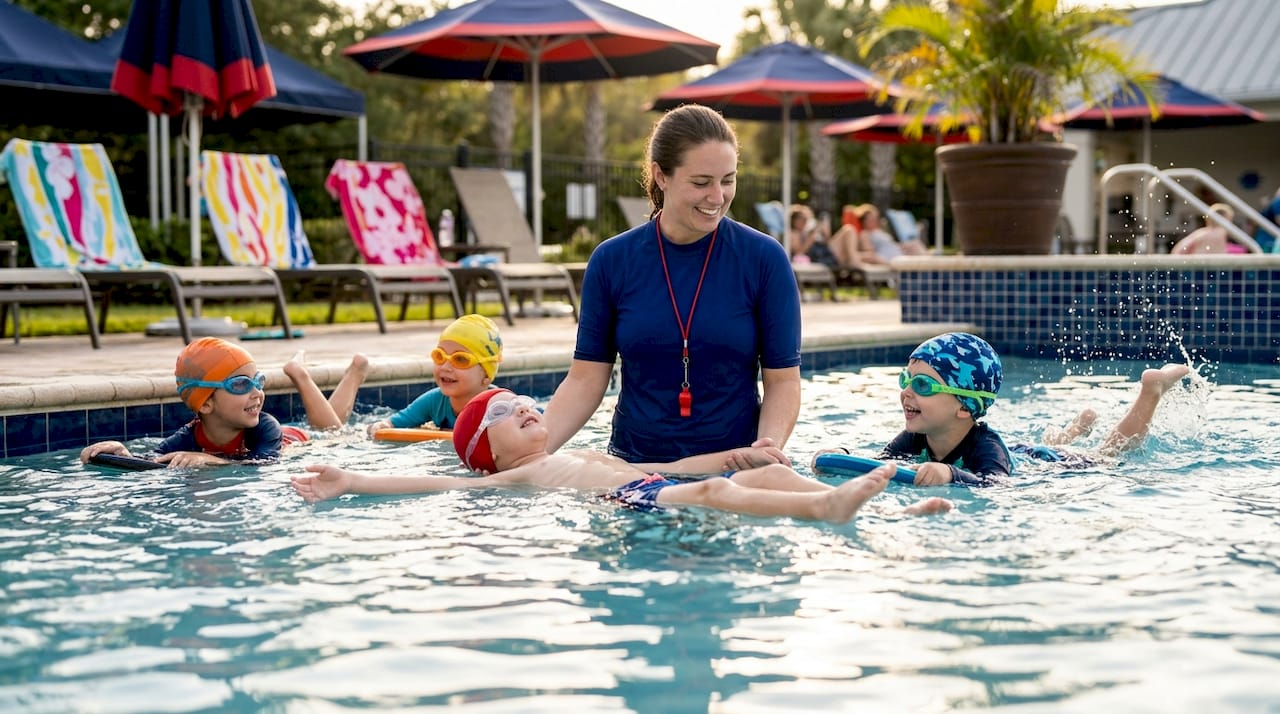
Small group swim instruction is defined as a structured teaching format where children learn to swim in classes limited to three to five students per instructor, delivering personalized attention alongside the motivational benefits of peer learning. Unlike large community pools where one instructor may oversee ten or more children, this format keeps ratios tight, typically 3:1 or 4:1, so every child gets real feedback on every skill attempt. Programs like the American Red Cross Swim Lesson Program and providers such as Felix’s Swim Schools have built their reputations on this model precisely because it produces faster skill gains and stronger water safety habits. For parents weighing options, understanding how this format works, what instructors actually do during class, and how to spot a quality program makes all the difference between a child who tolerates the water and one who genuinely thrives in it.
What is small group swim instruction and how does it work?
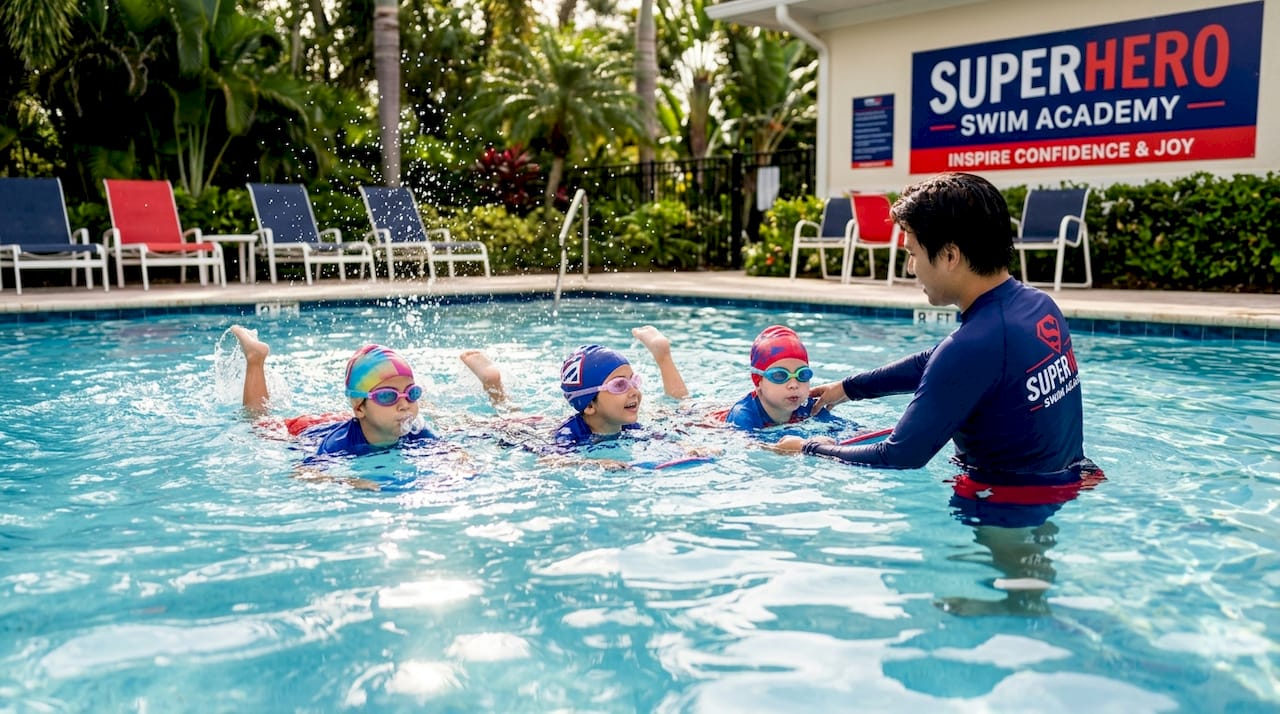
Small group swim instruction places children with similar ability levels together in a class of three to five students, guided by a single certified instructor. The instructor can watch each child attempt a skill, correct form immediately, and rotate attention without any child waiting more than a minute or two between turns. This real-time responsiveness is the core advantage. Small-group instruction allows instructors to tailor focus based on immediate needs, improving both understanding and confidence in ways that larger classes simply cannot replicate.
The format also activates peer modeling, a learning mechanism that private lessons miss entirely. Children learn by watching classmates attempt and master skills, which builds motivation and normalizes the process of trying, failing, and improving. A child who sees a peer kick correctly is more likely to attempt the same correction than one who only hears verbal instruction from an adult. This social dynamic accelerates progress in ways that are difficult to manufacture in a one-on-one setting.
How do small group swim lessons differ from private and large group lessons?
The clearest way to understand the differences is through what each format prioritizes. Private lessons maximize individual attention but remove the social learning element and typically cost significantly more per session. Large group classes reduce cost but spread instructor attention so thin that safety supervision becomes the primary focus rather than skill development. Small group lessons occupy the productive middle ground.
Felix’s Swim Schools offers 3:1 and 2:1 ratios as a deliberate middle ground, combining individualized focus with group benefits. That ratio structure means a child gets corrective feedback multiple times per session rather than once or twice. Felix’s also offers a 45-minute lesson format compared to the standard 30-minute community class, which allows time for warm-ups, repetitive skill practice, and confidence-building activities that shorter sessions cannot accommodate. More time in the water practicing the same movement pattern is how muscle memory actually forms.
Format | Instructor ratio | Typical session length | Key benefit | Main limitation |
Private lessons | 1:1 | 30 minutes | Maximum individual attention | No peer learning, higher cost |
Small group lessons | 2:1 to 4:1 | 30 to 45 minutes | Personalized attention plus peer modeling | Requires ability grouping |
Large group lessons | 1:8 or more | 30 minutes | Lower cost | Limited individual feedback |
Pro Tip: When searching for small group swim classes near me, ask programs directly about their instructor-to-student ratio. A program advertising “small group” but running 6:1 ratios is not delivering the benefits this format promises.
Parents often prefer small group lessons when they want peer interaction for their child but still need more instructor attention and safety supervision than larger classes allow. This preference reflects a practical reality: most children learn better when they feel both supported by an adult and motivated by peers.
What behavior management strategies do instructors use in small group swim classes?
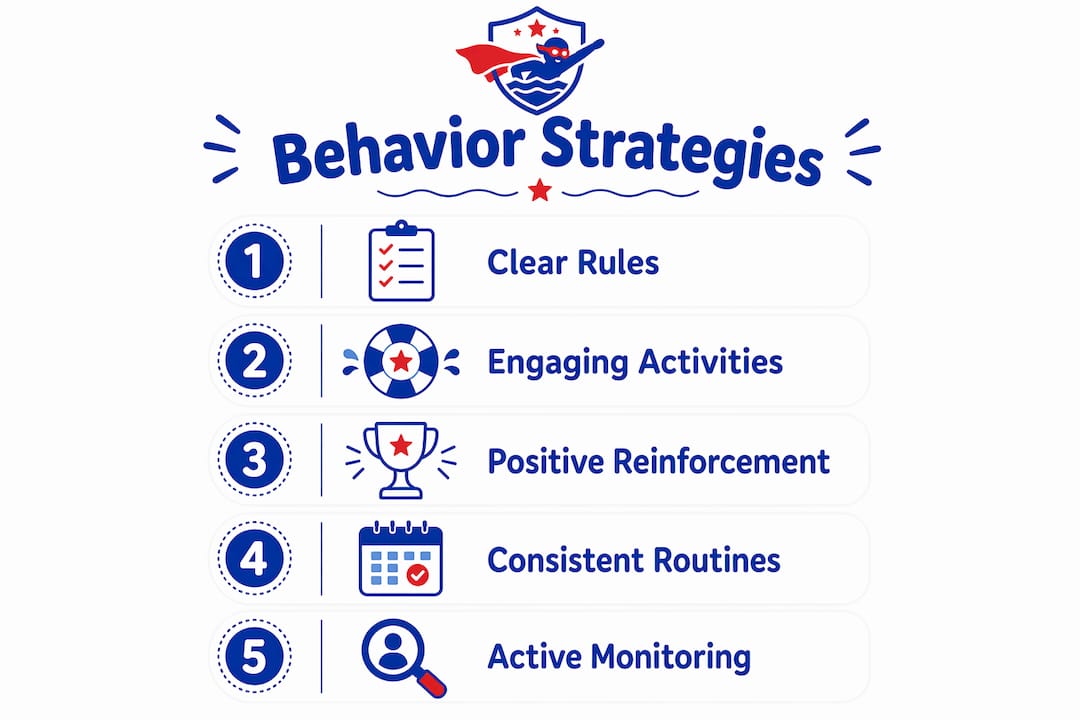
Behavior management in small group swim instruction is less about discipline and more about designing a class structure where disruptive behavior has little room to emerge. Effective behavior management prioritizes safety and engagement through structured routines, clear expectations, and flexibility rather than reactive correction. This distinction matters because a child who acts out in the water is often communicating a sensory need, a fear, or boredom from too much waiting.
Skilled instructors treat behavior as information. A child who splashes excessively may need more movement built into the lesson. A child who refuses to put their face in the water may need a graduated exposure sequence rather than a direct instruction. Sensory and attention challenges are addressed by allowing more movement, reducing wait time, and adapting equipment use to support regulation and group flow. This approach keeps every child engaged and progressing rather than managing one child while the others drift.
The top strategies instructors use in well-run small group swim classes include:
Structured routines: Beginning and ending each class the same way reduces anxiety and helps children transition into learning mode faster.
Visual schedules: Posting or narrating the lesson sequence gives children a mental map of what comes next, which reduces resistance to transitions.
Pacing to minimize wait time: Rotating activities so no child stands idle for more than 60 to 90 seconds keeps energy directed toward learning rather than misbehavior.
Equipment flexibility: Using noodles, kickboards, or flotation devices as tools for sensory regulation rather than just skill aids keeps participation high.
Positive reinforcement over correction: Naming what a child did correctly before addressing what needs adjustment builds confidence and keeps children receptive to feedback.
Pro Tip: Before enrolling, watch a class in session. If children are standing at the wall for more than two minutes waiting for their turn, the instructor’s pacing needs work. That wait time is where behavior problems and disengagement begin.
What swimming skills and techniques are taught in small group swim classes?
Small group swim classes follow a progressive curriculum that builds from water comfort to functional stroke technique. The American Red Cross Swim Lesson Program structures this progression by skill level, starting with water entry, breath control, and floating before advancing to freestyle, backstroke, and eventually competitive strokes. This sequencing is not arbitrary. Each skill creates the physical and psychological foundation for the next.
The specific skills covered in a well-structured small group program typically follow this order:
Water entry and exit safety: Teaching children how to enter and exit the pool safely, including how to call for help, is the first and most critical skill.
Breath control and submersion: Blowing bubbles and controlled face submersion build comfort and reduce the panic response that makes drowning risk spike.
Floating and body position: Front and back floats teach children that the water supports them, which is the psychological shift that unlocks all subsequent skill development.
Kicking mechanics: Proper kick technique from the hip rather than the knee is introduced early because it drives swim coordination and efficiency in every stroke.
Arm strokes and breathing patterns: Freestyle arm pull with rotational breathing is introduced once body position and kick are stable, preventing the common mistake of teaching strokes before the child has water confidence.
Games and confidence-building activities are woven throughout rather than saved for the end of class. A child who retrieves a toy from the bottom of the pool is practicing submersion and breath control without experiencing it as a drill. This integration of play into skill practice is a defining feature of quality small group swim coaching and a key reason children in these programs progress faster than those in purely drill-based formats.
How can parents choose the right small group swim program for their child?
Choosing a program requires looking past marketing language and evaluating specific, observable factors. High-quality programs maintain low class sizes, offer certified instruction, provide longer lessons, and operate with a clear class structure. Here is what to assess before committing:
Instructor-to-student ratio: Confirm the actual ratio, not the advertised one. Three to four students per instructor is the functional range for genuine personalized attention.
Instructor certification: Look for CPR and First Aid certification at minimum. Programs affiliated with the American Red Cross or that operate their own certified curriculum carry additional credibility.
Class length: A 45-minute session delivers meaningfully more skill repetition than a 30-minute session. For beginners especially, the extra time allows for warm-up and confidence activities that shorter classes skip.
Behavior management approach: Ask how instructors handle a child who refuses to participate. The answer reveals whether the program treats behavior as communication or as a discipline problem.
Location and scheduling flexibility: Consistent attendance drives progress more than any other variable. A program that fits your schedule and is conveniently located will produce better outcomes than a superior program you attend irregularly.
Understanding swim lesson pricing is also worth doing before you compare programs. Small group lessons cost more than large group classes and less than private instruction, but the value calculation depends on how much individual attention your child actually needs at their current skill level.
Key takeaways
Small group swim instruction delivers the most effective combination of personalized coaching and peer-driven motivation when class sizes stay at four students or fewer per instructor.
Point | Details |
Optimal class size | Three to four students per instructor is the functional range for real individual attention. |
Lesson length matters | Forty-five minute sessions allow skill repetition and confidence activities that 30-minute classes cannot fit. |
Behavior as communication | Effective instructors design pacing and routines to prevent disengagement rather than react to it. |
Skill progression is sequential | Water safety and floating must precede stroke instruction for lasting confidence and safety. |
Evaluate before enrolling | Watch a class live and ask about ratios, certifications, and behavior management before committing. |
Why small group instruction changed how I think about swim safety
I have worked with over 2,500 children at Superheroswimacademy, and the pattern I see most consistently is this: children who come from large group classes often know the shape of a skill without the substance of it. They can demonstrate a freestyle arm pull but cannot sustain it because no one had the bandwidth to correct their body position ten repetitions in a row. Small group instruction fixes that gap. It is not a compromise between private and group learning. It is a distinct format with its own advantages that neither extreme can replicate.
What surprises most parents is how much the social element accelerates safety learning specifically. A child who watches a peer practice a back float and then tries it themselves is building confidence through observation, not just instruction. That peer-driven courage is something I cannot manufacture in a private lesson no matter how skilled the instructor. The child who was terrified of the water in week one is often the child who becomes the peer model in week four, and that transformation happens faster in small groups than anywhere else.
My honest recommendation: do not default to private lessons because they feel more attentive. For most children between ages two and eight, a well-run small group program with a 3:1 ratio and a 45-minute session will outperform private instruction on both skill development and water confidence. The key word is well-run. Ratio and session length are the two numbers worth demanding before you sign up.
— SUPERHERO
See Superheroswimacademy’s small group swim programs
Superheroswimacademy serves families across Palm Beach and Broward counties with survival swim lessons built on the exact principles this article covers: tight ratios, certified instructors trained in CPR and First Aid, and a curriculum designed to produce safe, confident swimmers fast. Every instructor completes the academy’s own proven survival swim training before working with children.
Parents who enroll report measurable improvements in water confidence within weeks, not months. If you are ready to find a program that takes safety as seriously as skill development, explore swim lessons at Superheroswimacademy and check available locations near you.
FAQ
What is the ideal class size for small group swim lessons?
Three to four students per instructor is the standard for effective small group swim instruction. This ratio allows the instructor to observe and correct each child multiple times per session while maintaining full safety supervision.
How long should a small group swim lesson be?
Forty-five minutes is the recommended session length for small group swim classes, compared to the standard 30-minute community class. The additional time allows for warm-ups, repetitive skill practice, and confidence-building activities that shorter sessions cannot include.
At what age can children start small group swim instruction?
Most structured small group programs accept children starting at age two or three, once they can follow basic verbal instructions. Programs like Superheroswimacademy work with infants and toddlers using survival swim techniques adapted to developmental readiness.
How is small group swim instruction different from large group lessons?
Large group lessons typically run at 1:8 ratios or higher, where safety supervision becomes the instructor’s primary focus rather than skill development. Small group instruction at 3:1 or 4:1 ratios allows real corrective feedback on every skill attempt, which is what drives actual progress.
What should I look for in a small group swim program?
Confirm the actual instructor-to-student ratio, verify CPR and First Aid certification, ask about class length, and observe a session before enrolling. Programs that use structured lesson plans and minimize wait time between student turns consistently produce better outcomes.
Recommended
Comments