
Why Infant Swim Certification Matters for Safety
- superheroswim
- Jul 3
- 7 min read

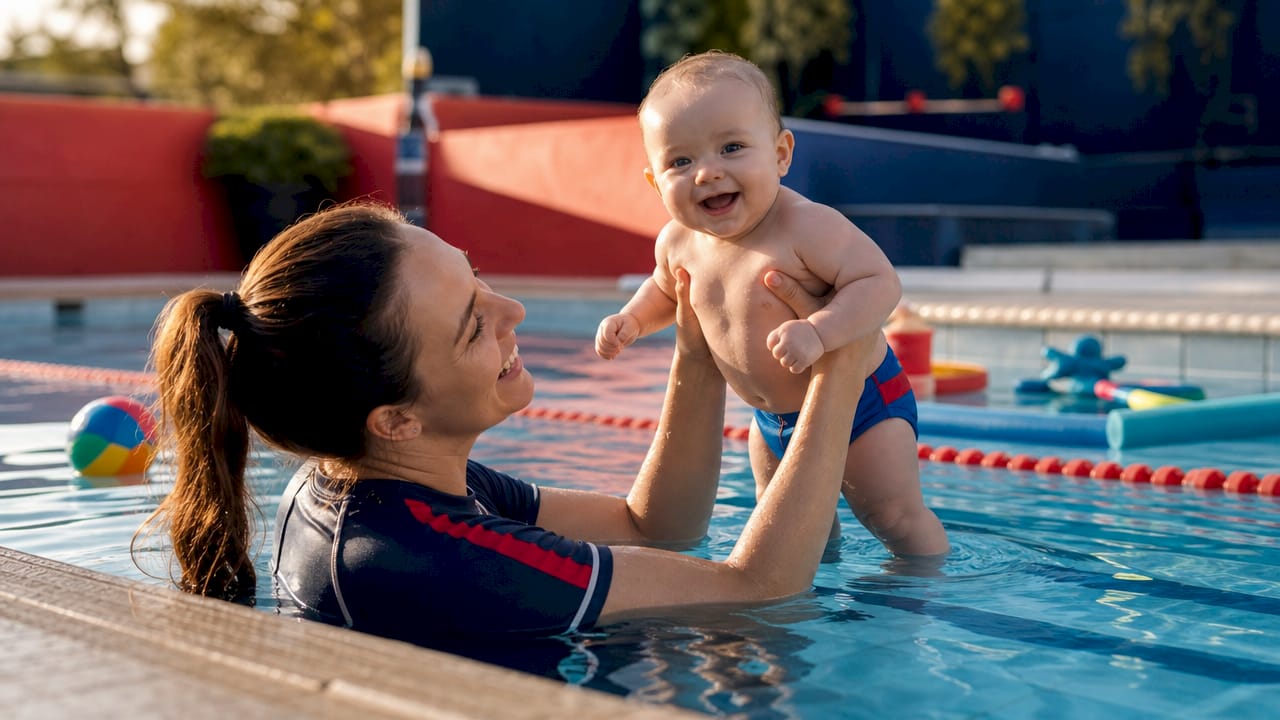
Infant swim certification is a specialized credential that confirms an instructor can deliver safe, effective swim lessons tailored to an infant’s unique developmental needs. This is not the same as a general lifeguard card or a basic swim coaching license. The American Academy of Pediatrics recommends swim lessons starting at age 1 as a key layer of drowning prevention, and the quality of that instruction depends directly on whether the instructor holds infant-specific training. Understanding why infant swim certification matters helps you make a smarter, safer choice for your child from the very first lesson.
Why infant swim certification matters for drowning prevention
Certified infant swim instruction is one of the most direct tools parents have to reduce drowning risk. The AAP reports that quality swim lessons can reduce drowning risk by up to 88% for children aged 1–4. That number only holds when instruction follows proper safety protocols, which is exactly what infant-specific certification trains instructors to deliver.
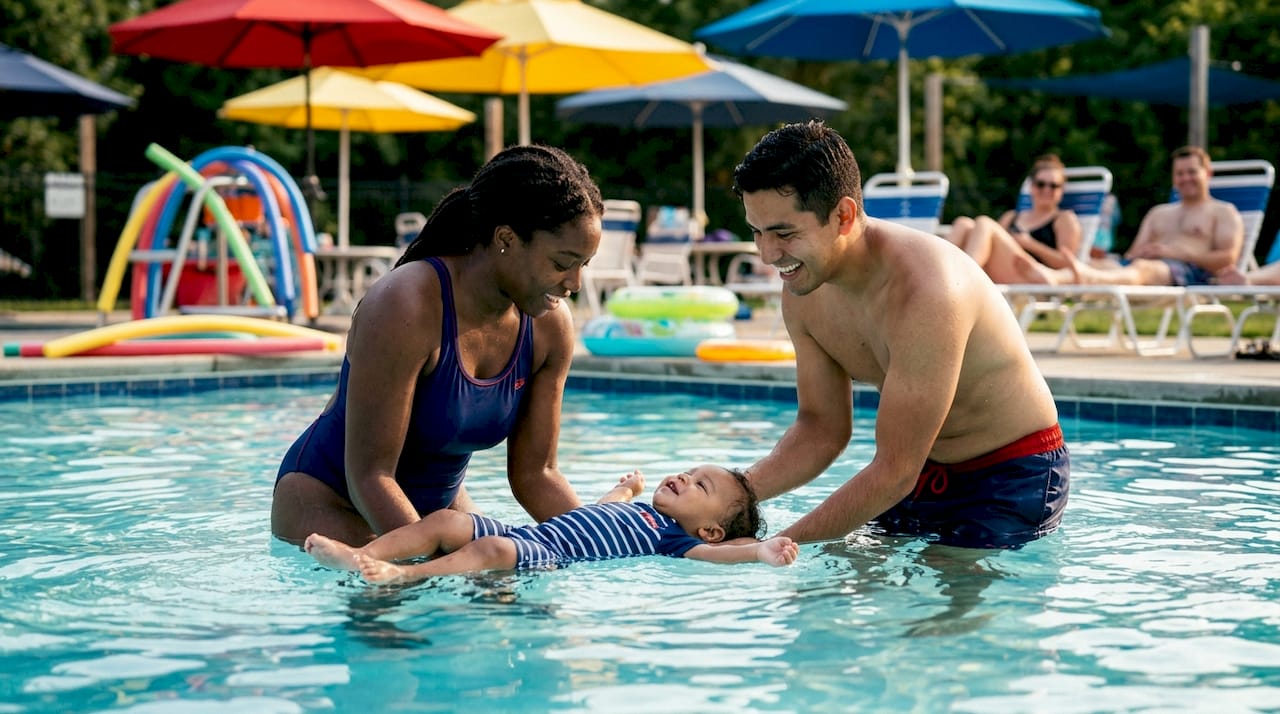
For infants under 1 year, the goal is not independent self-rescue. Babies at this stage cannot yet perform survival skills on their own. Instead, certified instructors focus on water familiarization and supervised reflex floating in a controlled environment. This lays the groundwork for genuine safety skills as the child grows.
Environmental controls are a core part of what certified instructors manage. Water temperature between 87°F and 94°F prevents hypothermia and keeps infants calm during sessions. Low student-to-instructor ratios, ideally no more than 6 children per instructor, allow for constant supervision and immediate response if a child shows distress.
Certified instructors monitor infant cues like shivering, lip color changes, and fatigue
They maintain water temperature within the safe 87°F–94°F range
They follow structured safety protocols specific to infant physiology
They hold CPR and First Aid credentials alongside their aquatic training
Pro Tip: Ask any swim program to show you the instructor’s infant-specific certification before your child’s first lesson. A general swim teaching credential does not confirm the instructor is trained for infant safety protocols.
What developmental benefits come from certified infant swim lessons
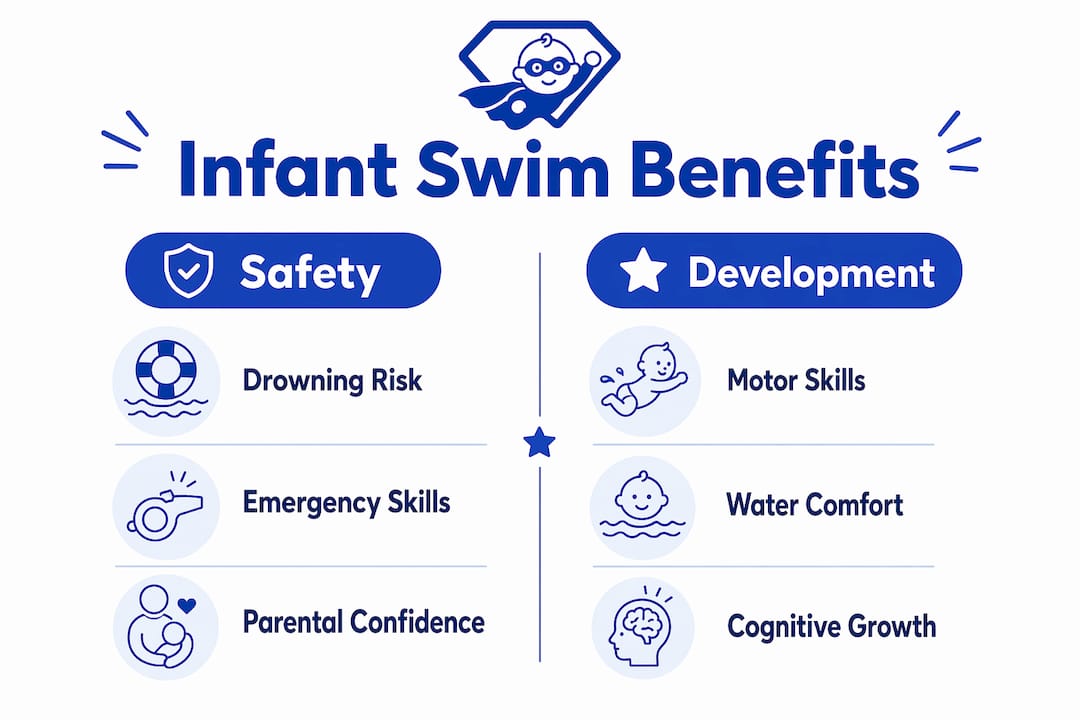
Certified instruction does more than keep infants safe in the water. It actively supports early development during one of the most sensitive neurological windows in a child’s life. A Griffith University study found that infants in structured aquatic settings reach developmental milestones 6 to 15 months earlier in motor, language, and math skills compared to non-swimming peers. That is a significant head start driven by the quality of structured, certified instruction.
The developmental gains fall into three clear categories:
Gross motor skills. Kicking, reaching, and balancing in water build core strength and coordination faster than many land-based activities at this age.
Cognitive growth. Following instructor cues, responding to water movement, and processing new sensory inputs all stimulate brain development.
Emotional regulation. Infants who experience early water exposure in supportive environments develop confidence rather than fear, reducing panic risk during accidental submersion.
The neurological benefits go deeper than motor skills alone. Sensory inputs from buoyancy and movement lay foundations for spatial awareness and coordination that carry into early childhood. A certified instructor knows how to structure these experiences so they build on each other progressively, rather than overwhelming the infant.
“True aquatic learning requires skills that persist beyond lessons. Certified instructors focus on retention and transfer, not just performance during class.” — Aquatics International
This distinction matters. A child who performs well in class but cannot apply those skills in a real water situation has not truly learned. Certified instructors build transferable water competence, which is the only kind that protects a child outside the pool.
Understanding how early swim lessons benefit development can help parents set realistic expectations and recognize genuine progress.
What qualifications define true infant swim certification
Not all swim credentials are equal. A general aquatic instructor certification covers broad teaching techniques for older children and adults. Infant-specific swim certification goes further, training instructors in the physiological and developmental realities of teaching babies. Parents should verify infant-specific credentials rather than accepting a generic certification as sufficient proof of competence.
Legitimate infant swim certification includes several specific components:
Infant developmental coursework. Instructors learn how infants process sensory input, how reflexes function in water, and what physical responses signal distress.
In-water training hours. Classroom knowledge alone is not enough. Certified instructors complete supervised in-water practice with infants before teaching independently.
Safety protocol mastery. This covers water temperature management, emergency response, CPR for infants, and appropriate instructor-to-child ratios.
Recognition of developmental cues. Certified instructors read infant body language accurately, adjusting sessions when a child shows fatigue, cold, or fear.
The difference between a certified and uncertified instructor shows up most clearly in how they handle unexpected situations. An instructor without infant-specific training may not recognize early signs of hypothermia or know how to safely support a baby who startles in the water. Certified instructors have practiced these responses until they are instinctive.
Superheroswimacademy requires every instructor to complete CPR, First Aid, and the academy’s own survival swim curriculum before teaching. That layered training standard is what infant-specific certification looks like in practice.
Pro Tip: Before enrolling, ask the program three direct questions: What infant-specific certification does each instructor hold? What is the water temperature maintained during infant classes? What is the maximum class size for infants?
Just as qualified swim instructors are essential for child safety in the pool, certified newborn care professionals set a similar standard in early parenting education, as explored in this guide on newborn care classes.
How to choose the right certified infant swim program
Choosing a program means evaluating both the instructor’s credentials and the physical environment. Both factors directly affect your infant’s safety and comfort. A certified instructor working in a cold, overcrowded pool cannot deliver the same outcomes as one working in a properly controlled setting.
Water temperature is the first thing to confirm. The 87°F–94°F range prevents hypothermia and keeps infants relaxed enough to learn. Pools outside this range create physical stress that works against the lesson’s goals.
Class size is the second factor. A ratio above 6 children per instructor reduces the supervision each child receives. For infants, constant individual attention is not optional. It is what keeps the session safe.
The program’s goals should also match your child’s age and developmental stage. The table below outlines what to expect at different points in early infancy.
Age range | Primary program goal | Key skills targeted | What to look for |
Under 6 months | Water familiarization | Sensory comfort, reflex floating | Warm water, parent-assisted sessions |
6–12 months | Supervised water play | Breath control, kicking, grip | Low ratios, certified supervision |
12–18 months | Basic survival skills | Back float, wall reach, submersion | Structured curriculum, skill progression |
18–36 months | Skill building and confidence | Independent floating, entry safety | Progressive goals, parent progress updates |
Progressive skill building matters as much as the starting point. A good program does not repeat the same activities session after session. It tracks each child’s development and advances the curriculum as the infant demonstrates readiness. Superheroswimacademy provides parents with clear goals and regular progress updates so you always know where your child stands.
For a detailed breakdown of age-appropriate swim instruction, current pediatric guidelines offer a useful reference by developmental stage.
Key Takeaways
Infant swim certification is the single most reliable indicator that an instructor can keep your child safe and support genuine skill development in the water.
Point | Details |
Certification reduces drowning risk | Quality certified instruction can reduce drowning risk by up to 88% for children aged 1–4. |
Under-1 focus is familiarization | Infants under 1 year need water comfort and reflex floating, not independent survival skills. |
Development gains are measurable | Certified instruction supports milestones reached 6–15 months earlier in motor and cognitive skills. |
Infant credentials differ from general ones | Verify infant-specific certification, not just a general aquatic teaching license. |
Environment controls are non-negotiable | Water at 87°F–94°F and ratios no higher than 6:1 are required for safe infant classes. |
What I’ve learned from watching certified instruction change outcomes
Parents often ask me whether infant swim lessons are really necessary at such a young age. My honest answer is that the lessons themselves matter less than the quality of who is teaching them. I have seen children complete months of uncertified group classes and still freeze when they slip unexpectedly into a pool. I have also seen infants taught by certified instructors develop a calm, instinctive response to water within weeks.
The certification is not a bureaucratic checkbox. It represents an instructor who has studied infant physiology, practiced emergency responses, and learned to read the subtle cues that tell you a baby is reaching their limit. That knowledge changes what happens in the water every single session.
Parents sometimes worry that starting lessons early will stress their infant. The opposite is true when the instructor is properly trained. Certified instructors know how to pace sessions, read discomfort before it becomes distress, and build positive associations with water that last for years. The sensory experience of water during infancy shapes emotional responses to aquatic environments well into childhood.
My strongest advice is this: do not evaluate a swim program by its facilities or its marketing. Evaluate it by the specific credentials of the person who will be in the water with your child. That instructor is the program.
— SUPERHERO
Certified infant swim lessons at Superheroswimacademy
Superheroswimacademy has taught over 2,500 children in Palm Beach and Broward counties, with every instructor trained in CPR, First Aid, and the academy’s own survival swim curriculum.
Infant classes run in warm, closely supervised environments designed specifically for the youngest swimmers. Parents receive clear progress goals and regular updates so you always know what your child is working toward. If you are ready to give your infant a safe, structured start in the water, explore certified swim lessons or find a location near you at Superheroswimacademy locations. The instructors are trained, the environment is controlled, and the curriculum is built around your infant’s safety first.
FAQ
Why does infant swim certification matter for safety?
Infant swim certification confirms that an instructor is trained in infant-specific safety protocols, emergency response, and developmental cues. The AAP links quality certified instruction to up to an 88% reduction in drowning risk for children aged 1–4.
When should infants start swim lessons?
The American Academy of Pediatrics recommends swim lessons starting at age 1 as a key drowning prevention measure. Infants under 1 year can begin water familiarization classes with certified supervision in warm, controlled pool environments.
What is the difference between general and infant swim certification?
General aquatic certifications cover broad teaching methods for older children and adults. Infant swim certification adds specialized training in infant physiology, reflex responses, water temperature management, and emergency protocols specific to babies.
What water temperature is safe for infant swim classes?
Water between 87°F and 94°F is the recommended range for infant swim classes. Temperatures outside this range increase the risk of hypothermia and physical stress, which works against learning and safety.
How do I know if a swim program uses certified infant instructors?
Ask the program directly for each instructor’s infant-specific certification, not just a general teaching credential. Also confirm the water temperature maintained during infant sessions and the maximum class size before enrolling.
Recommended
Comments