
Year Round vs Seasonal Swim Lessons: Safety Guide for Parents
- superheroswim
- Jun 12
- 8 min read


Year-round swim lessons are defined as continuous, scheduled instruction throughout all twelve months, while seasonal swim lessons occur only during specific periods, most commonly summer. The American Academy of Pediatrics recommends swim lessons starting at age 1 as one layer of drowning prevention, making the frequency and consistency of instruction a genuine safety decision, not just a scheduling preference. For parents in Palm Beach and Broward counties weighing year round vs seasonal swim lessons, the choice directly affects how well your child retains water survival skills and how prepared they are when they encounter water unexpectedly.
1. Year-round vs seasonal swim lessons: what the research actually says
Year-round swim programs eliminate the long gaps that cause skill regression in young children. A 2025 systematic review found that program duration and lesson delivery settings directly impact skill acquisition, meaning how often and how consistently a child practices matters as much as the quality of any single lesson. Seasonal programs, by design, interrupt that consistency for months at a time.
The core issue is neurological. Young children between ages one and five are still building motor memory, and water survival skills like floating, rolling to breathe, and reaching a wall require repeated practice to become automatic. A child who completes a summer program in June and returns to the pool the following May has lost months of reinforcement during the exact developmental window when habits form fastest.
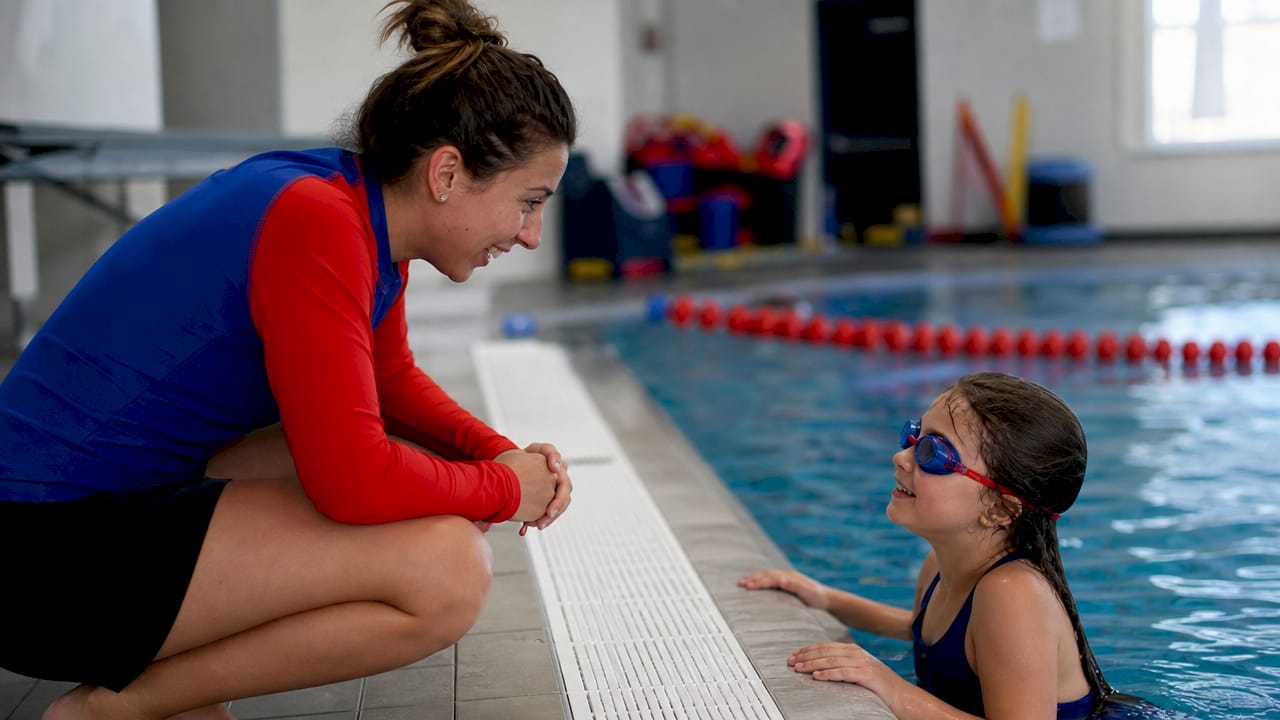
Continuous swim lessons promote better progression, water readiness, and confidence compared to seasonal-only programs. That is not a minor advantage. For a toddler who visits a grandparent’s pool in October, the difference between retained and forgotten survival skills is the difference between a recoverable situation and a tragedy.
2. Key benefits of year-round swim lessons for children
Year-round instruction delivers advantages that seasonal programs structurally cannot replicate. The most significant ones are listed below.
No skill regression. Children who swim year-round do not spend the first weeks of each new session relearning what they forgot. Every lesson builds on the last.
Progressive survival skill development. Survival swimming, which includes floating, self-rescue, and breath control, develops in stages. Year-round programs allow instructors to advance each child at their own pace without resetting.
Water safety culture at home. Families enrolled in year-round programs stay engaged with water safety habits, pool rules, and supervision practices throughout the year, not just in summer.
Scheduling flexibility. Many year-round programs offer weekday, evening, and weekend options, making seasonal swim lesson planning less stressful for busy families.
Refresher lessons as children grow. The AAP’s updated guidance emphasizes continued instruction and parent engagement as children encounter new aquatic environments, such as open water, deeper pools, or unfamiliar settings.
Parent education continuity. When parents stay connected to a program year-round, they receive ongoing guidance on supervision, pool barriers, and safety layers that go beyond the water itself.
Pro Tip: If your child is enrolled in a year-round program, ask the instructor to set one specific skill goal per month. Written goals give parents a clear benchmark and keep children motivated between sessions.
The AAP’s position on swim lessons is explicit: lessons are one layer of a multi-layer drowning prevention strategy. Year-round enrollment keeps all those layers active and reinforced simultaneously.
3. Seasonal swim lesson advantages and their real limitations
Seasonal swim lessons are not without merit. For families with tight budgets, limited pool access in winter, or children who are not yet developmentally ready for year-round commitment, a well-structured seasonal program is far better than no instruction at all.
The genuine advantages of seasonal programs include:
Lower upfront cost. A summer session typically costs less than twelve months of enrollment, which matters for families managing multiple children or limited discretionary income.
Natural alignment with water exposure. Children swim more in summer, so lessons timed to that season feel immediately relevant and motivating.
Easier scheduling for school-year families. Removing swim lessons from the fall and winter calendar reduces logistical pressure during the school year.
However, the drawbacks are serious and worth examining honestly. Skill loss during seasonal breaks is well-documented, and children who face water exposure during off-season months do so with degraded survival readiness. A child who completed lessons in August and attends a birthday pool party in November is not the same swimmer they were three months earlier.
The risk is compounded by a false sense of security. Parents who completed a summer program often believe their child is “water safe” through the following spring. That assumption is dangerous. Seasonal programs may appear cost-effective short-term, but re-learning time and safety risks can create higher long-term costs, both financial and otherwise.
4. Comparison: year-round vs seasonal swim lessons across key factors
Factor | Year-round lessons | Seasonal lessons |
Skill retention | High. No long gaps to cause regression. | Lower. Skills often degrade during off-season breaks. |
Safety readiness | Consistent year-round water survival readiness. | Gaps in readiness during months away from instruction. |
Cost | Higher monthly commitment, lower re-learning costs. | Lower upfront cost, potential for repeated re-learning fees. |
Scheduling | Flexible options across all seasons. | Concentrated scheduling, often summer only. |
Parent engagement | Ongoing safety education and instructor communication. | Limited to active enrollment period. |
Supervision needs | Reinforced continuously through program contact. | Requires extra vigilance during off-season months. |
This table makes one pattern clear. Year-round programs require more consistent investment, but they deliver consistent protection. Seasonal programs demand more from parents during the gaps, including stricter supervision, pool barriers, and informal water practice to slow skill loss.
5. How to choose the right swim lesson approach for your family
The right choice depends on your child’s specific water exposure, your family’s schedule, and the quality of the programs available to you. Work through these questions before enrolling.
How often is your child near water outside of lessons? If your home has a pool, you live near a lake, or your child visits homes with water access regularly, year-round instruction is the safer choice. The risk of water exposure without recent lessons is highest for children in these situations.
What is your child’s current skill level? Children who have not yet mastered basic survival skills, including floating independently and reaching a wall, need more consistent instruction, not less.
What does the program prioritize? Choosing programs with certified, CPR-trained instructors who focus on progressive survival skills produces better long-term water safety outcomes than programs focused primarily on stroke technique.
Can you supplement seasonal breaks? If year-round enrollment is not financially feasible, plan informal water practice sessions during off-season months and maintain strict pool supervision protocols. In-home swim safety practices can help bridge the gap between formal lessons.
Does the program involve parents actively? Parent education and engagement are critical components alongside swim lessons. Programs that update parents on goals and progress extend safety education beyond the pool.
Pro Tip: When evaluating any swim program, ask specifically whether instructors hold current CPR and First Aid certification and whether the curriculum includes survival skills, not just recreational strokes. Those two questions separate safety-focused programs from recreational ones.
A 2025 review published in Frontiers in Public Health confirmed that pedagogy and program structure affect outcomes as much as lesson frequency. The best weekend swim lesson planning guide is one that starts with program quality, then addresses scheduling.
Key takeaways
Year-round swim lessons are the stronger safety choice for young children because consistent practice prevents skill regression and keeps survival readiness intact across all twelve months.
Point | Details |
Skill retention favors year-round | Children lose survival skills during long breaks, requiring re-learning before advancing. |
Seasonal lessons carry off-season risk | Children near water during breaks may lack the readiness they had at the end of their last session. |
Program quality matters as much as frequency | Certified, CPR-trained instructors using progressive survival curricula produce better outcomes. |
Parent engagement extends safety beyond lessons | Active parent involvement reinforces water safety habits and supervision practices year-round. |
Cost comparison is not straightforward | Seasonal programs cost less upfront but may require repeated re-learning, adding time and expense. |
Why I believe gaps in swim instruction are the most underestimated safety risk
After working with over 2,500 children at Superheroswimacademy, the pattern I see most consistently is this: parents are surprised by how quickly young children lose skills they appeared to have mastered. A toddler who could float independently in August often cannot replicate that skill reliably by October. That is not a failure of the child or the instructor. It is simply how motor memory works at that developmental stage without reinforcement.
What concerns me most is the confidence gap. Parents who complete a summer program often feel their child is protected through the following season. That belief is understandable, but it does not match what we observe. The children who arrive for their first lesson after a six-month break are not picking up where they left off. They are starting over, often with less fear of the water than they should have, which creates its own risk.
The families who see the most consistent progress at Superheroswimacademy are those who treat swim lessons the way they treat pediatric checkups: as a year-round commitment, not a seasonal event. That mindset shift changes everything. It keeps parents engaged, keeps children progressing, and keeps survival skills sharp during the months when children are still near water but no longer in formal instruction.
I also want to be direct about something the broader swim lesson conversation often avoids. Swim lessons, whether year-round or seasonal, are one layer of protection. They are not a substitute for pool fencing, constant adult supervision, or life jackets in open water. The families who build all of those layers together, and maintain them year-round, are the ones who never have to use the survival skills their children learned. That is the goal.
— SUPERHERO
Start swimming lessons that work all year in Palm Beach and Broward
Superheroswimacademy offers year-round swim lessons for infants, toddlers, and young children across Palm Beach and Broward counties, with every instructor certified in CPR, First Aid, and the academy’s own survival swim curriculum. Parents receive regular progress updates and clear skill goals so you always know exactly where your child stands.
If you are weighing year-round vs seasonal swimming for your child, Superheroswimacademy’s team can help you find the right fit based on your child’s age, current skill level, and your family’s schedule. With over 2,500 children taught and convenient locations across both counties, getting started is straightforward. Reach out today to ask about enrollment and available session times.
FAQ
When should children start swim lessons?
The American Academy of Pediatrics recommends swim lessons starting at age 1 as one layer of drowning prevention. Starting early gives children more time to build and reinforce survival skills during the most vulnerable developmental years.
Do kids really lose swim skills during seasonal breaks?
Yes. Young children can lose significant water survival readiness during long off-season breaks, often requiring re-learning before they can progress. The shorter the gap between lessons, the better the skill retention.
Are year-round swim programs worth the extra cost?
Year-round programs cost more monthly but reduce the time and expense of re-learning skills after seasonal breaks. For children with regular water exposure, the safety benefit alone justifies the investment.
What should I look for in a quality swim program?
Look for certified instructors with current CPR and First Aid training, a curriculum that teaches survival skills progressively, and a program that actively involves parents in tracking their child’s goals and progress.
Can I supplement seasonal lessons to reduce skill loss?
Yes. Informal water practice sessions, strict pool supervision, and pool barriers during off-season months can slow skill regression. However, these measures do not fully replace the benefit of consistent formal instruction.
Recommended
Comments