
Infant Drowning Prevention Strategies for Parents
- superheroswim
- Aug 6
- 16 min read

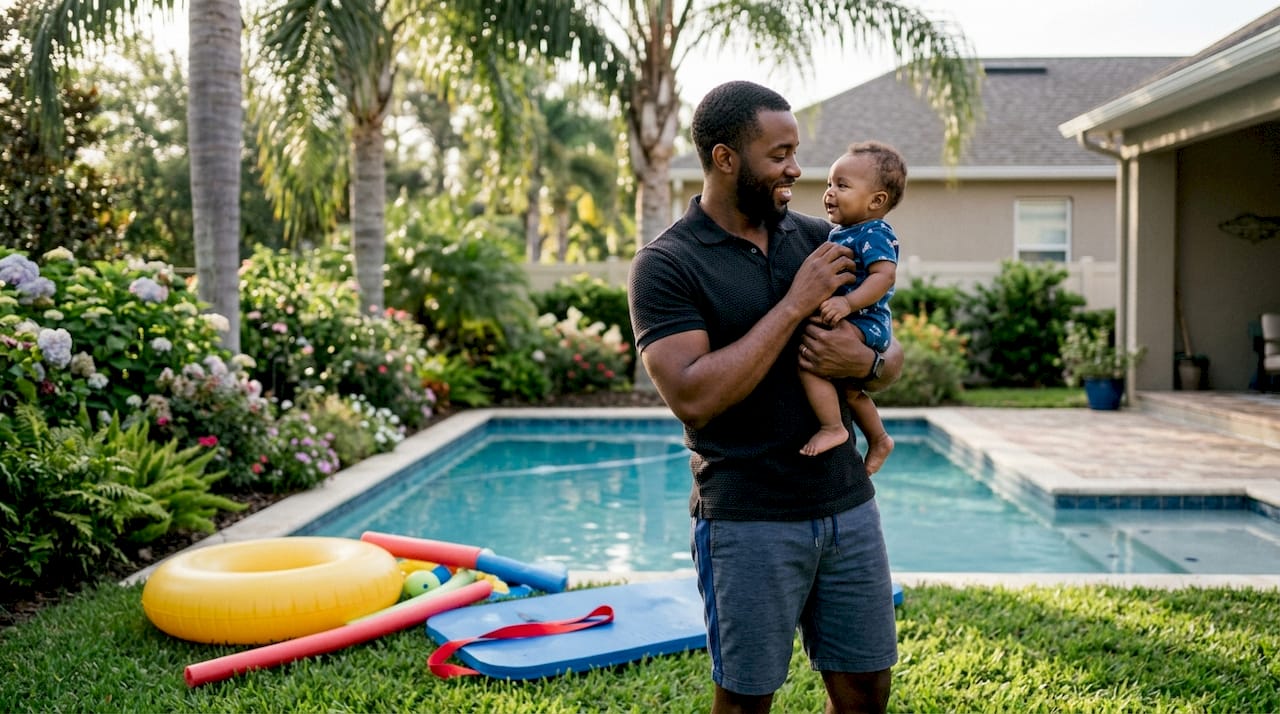
Keep your infant within arm’s reach every single time water is present. That one rule, applied without exception, prevents more drownings than any other single measure. The AAP recommends “touch supervision” during bath time, which means one hand stays on the baby at all times. Beyond that, the most effective infant drowning prevention strategies combine multiple layers: physical barriers, rescue equipment, caregiver CPR training, and formal swim safety education.
Here is what to do right now, before you read another word:
Stay within arm’s reach of any infant near water, including bathtubs, buckets, and pet bowls.
Empty all portable water containers (buckets, inflatable pools, wading pools) immediately after use.
Lock the bathroom door and keep toilet lids down when the room is unsupervised.
Check your pool gate is fully latched and self-closing; never prop it open.
Schedule infant CPR training through the American Red Cross or American Heart Association this week.
Contact a qualified swim program like Superheroswimacademy for a safety consultation and age-appropriate lessons.
Table of Contents
Why infants face a uniquely high drowning risk
Infants can drown in as little as 1–2 inches of water, and most indoor drownings for children under 1 occur in bathtubs. That number stops most parents cold, and it should. A bathtub, a mop bucket left in the hallway, a decorative fountain in the backyard — each one is a genuine hazard for a baby who cannot lift their head out of water.
Drowning is almost always silent. There is no splashing, no yelling for help. It can happen in under a minute, which is why even a brief distraction — grabbing a towel from the other room, answering a text — creates real danger. Infants can drown in as little as 1 to 2 inches of water (as of June 2024 per the American Academy of Pediatrics). What makes the risk especially hard to manage is how fast infants change. A baby who could not roll last week can roll this week. A crawler becomes a puller-upper almost overnight. Each new motor skill opens access to hazards that were previously out of reach, which means a home safety audit done in January may be outdated by March. Repeat the audit every time your infant hits a new developmental milestone.
How does the layers-of-protection framework actually work?
No single safety measure is enough on its own. The World Health Organization’s drowning prevention framework is built on this principle: layer multiple protections so that when one fails, another catches the gap.
The core layers are:
Close, constant supervision — the designated adult stays focused, phone down, alcohol-free.
Physical barriers — four-sided pool fencing, locked bathroom doors, secured cabinets.
Alarms and covers — pool alarms and safety covers as supplemental tools, not replacements for fencing.
Rescue equipment — a reach pole, life ring, and a charged phone at every water access point.
CPR-trained caregivers — at least one adult in the household certified in infant CPR.
Swim safety education — age-appropriate lessons that teach water response, not just strokes.
The power of layering shows up in real scenarios. A gate that is accidentally left unlatched is caught by a pool alarm. A momentary lapse in supervision is caught by the fence. A child who slips past both is caught by a caregiver who knows infant CPR. Layers of protection significantly reduce drowning risk precisely because a failure in one layer can be caught by another.
Common single-point failures to avoid:
Treating inflatable floaties as a safety device.
Leaving the pool gate propped open “just for a minute.”
Assuming swim lessons alone make a child safe near water.
Pro Tip: Assign one adult as the designated “water watcher” at every gathering near water. That person holds a physical card or wristband as a reminder, steps away from conversations, and hands the role off explicitly before leaving. No phone, no food, no exceptions.
Practical bath-time and bathroom safety rules for infants
Bath time is the highest-risk indoor water scenario for infants under 1. The fix is not complicated, but it requires consistency every single time.
Bath-time checklist
Before you run the water:
Set your water heater to no higher than 120°F and test the bath water with your wrist or elbow before placing the baby in.
Fill the tub with a small, shallow amount of water suitable for infants.
Have the towel, soap, and clean clothes within arm’s reach before the bath starts.
Keep one hand on the baby throughout. If the phone rings or someone knocks, take the baby with you or ignore it.
Never leave an infant in the bath to answer the door, grab a forgotten item, or check on another child. The AAP’s “touch supervision” standard means physical contact, not visual contact from across the room.
Bathroom hazards beyond the tub
Toilets, buckets, mop buckets, laundry tubs, and decorative water features are all common drowning locations for young children. Keep toilet lids down and use a lid lock. Store buckets empty and upside down. Keep bathroom doors closed and use a door knob cover or hook-and-eye latch out of reach.
Bath seats and infant tub inserts are useful positioning tools, but they are not safety devices. A baby can tip out of a bath seat in seconds. The seat does not change the supervision requirement.
Pro Tip: Set up a “bath station” basket on the counter before you ever turn on the tap. Towel, diaper, pajamas, lotion, everything. When it is all staged in advance, there is no reason to leave the room.
Pool and backyard water safety: fences, gates, and daily habits
A four-sided pool fence is the single most researched and effective strategy for preventing pool drownings in young children. StatPearls research confirms that the fence must be at least 4 feet high, completely surround the pool on all four sides, and feature self-closing, self-latching gates with the latch positioned out of a child’s reach. A three-sided fence that uses the house as the fourth wall is significantly less effective because it allows direct access from the home.
Pool alarms and safety covers are supplemental tools, not substitutes. StatPearls is explicit that alarms and covers should be used in addition to fencing and supervision, never instead of them.
Weekly pool safety checklist
Confirm the gate is self-closing and the latch is functioning.
Remove all pool toys from the water and deck after each use. Toys left around pools attract children toward the water on their own.
Check that the rescue pole, life ring, and a charged phone are accessible at the pool edge.
Test the pool alarm.
Inspect the fence line for gaps, loose boards, or anything a child could use to climb.
Inflatable and temporary pools carry the same drowning risk as permanent in-ground pools. Empty them completely after every use, turn them upside down, and store them where a child cannot access them. Never leave even an inch of standing water in an inflatable pool overnight.
At gatherings, designate a water watcher before guests arrive. The AAP policy statement is clear that supervision must be close, constant, and attentive, with no distractions from phones, socializing, or alcohol. Older children should never be assigned to supervise infants near water.
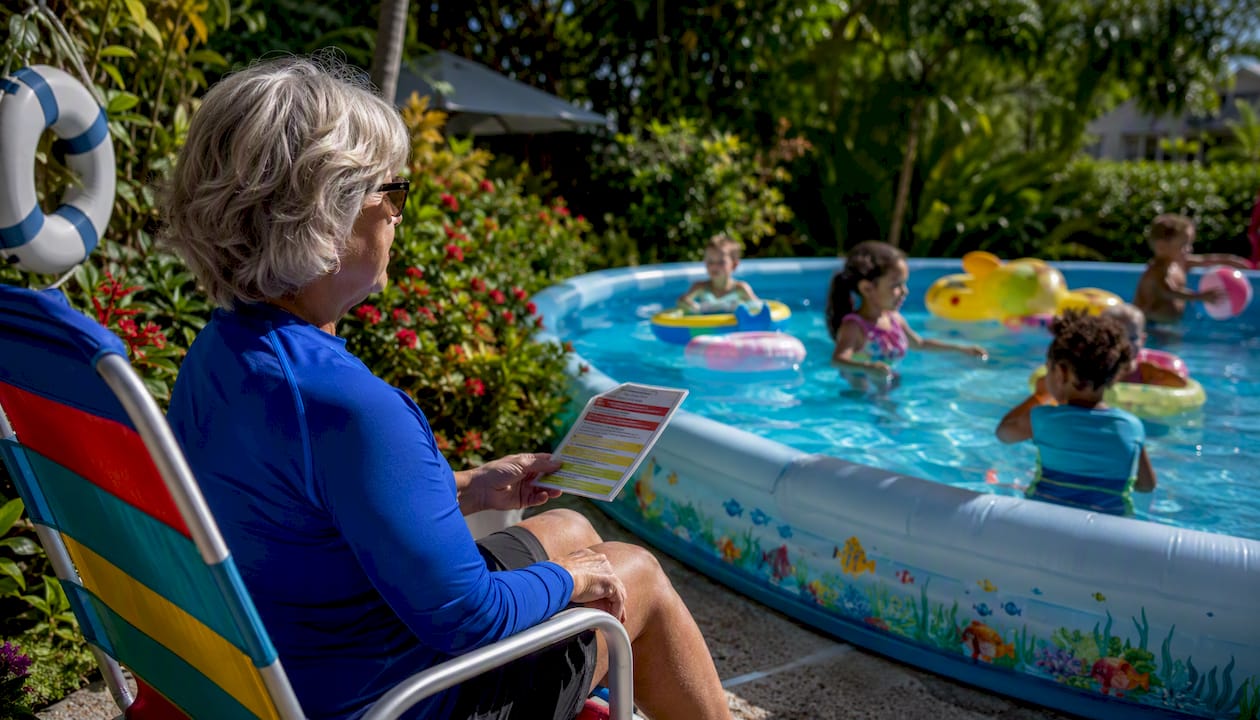
Pro Tip: Post a laminated “Water Watcher” card by the pool gate. When a guest arrives, hand it to the designated adult. When they need a break, they hand it to the next adult explicitly. The physical handoff prevents the gap where everyone assumes someone else is watching.
Safety around lakes, rivers, beaches, and boats
Natural water presents hazards that a backyard pool does not: currents, drop-offs, cold water, murky visibility, and variable footing. The supervision rules are the same, but the environment is less forgiving.
Always use a U.S. Coast Guard–approved life jacket sized for your infant on boats, docks, and near open water. Check the label for the weight range and test the fit: straps snug, chin support in place, no more than 2 inches of slack when you lift the jacket by the shoulders.
Stay within touching distance at beaches and natural water areas. Waves and currents can move a child faster than most adults can react.
Avoid surf, rapid currents, and murky water entirely with infants. Plan your exit point before you enter any natural water area.
On boats: keep infants in a properly fitted PFD at all times on deck. Tether or stow toys that could roll toward the edge. Post emergency numbers and keep a reach tool on deck.
Identify the nearest lifeguard station or emergency services before you settle at any beach or lake.
Air-filled water wings and inflatable rings give a false sense of security and are not substitutes for a USCG-approved PFD. A child can slip out of water wings in seconds, and an inflatable ring can flip. Neither is a life jacket.
What can swim lessons actually do for infants?
Swim lessons are one layer of protection, not a complete solution. The AAP is direct on this point: lessons do not “drown-proof” a child and should not replace supervision and physical barriers. What they do is build water familiarity, teach basic self-rescue responses, and give parents skills to support their child’s development in water.
Many organizations recommend beginning structured lessons when a child is developmentally ready, often after age 1, though local programs vary and some offer parent-and-child classes for younger infants. Swim ability alone is not a reliable protective factor for infants; over-reliance on early swim skills creates dangerous complacency.
How to choose a safe swim program
Verify instructor credentials. Every instructor should hold current CPR and First Aid certification. Ask to see it.
Check the instructor-to-child ratio. Smaller ratios mean more individual attention and faster response if something goes wrong.
Confirm the pool is heated. Cold water increases stress and shortens safe lesson time for infants.
Ask about the curriculum focus. Safety-first programs teach water response and self-rescue; performance programs focus on stroke technique. For infants, safety comes first.
Look for parent involvement. Parent-and-child classes let you learn alongside your infant and reinforce skills at home.
Request transparent progress reporting. You should know exactly what your child is working toward and how they are progressing.
Trust signals worth verifying: published instructor certification requirements, clear emergency protocols posted at the facility, and evidence of a structured curriculum rather than freeform play.
Superheroswimacademy’s instructors carry CPR and First Aid credentials and follow a structured survival swim curriculum. Their approach to keeping infants safe in water is built around measurable safety goals, not just water confidence. For parents in Palm Beach and Broward counties, that combination of credentials and local availability matters.
Pro Tip: Before the first lesson, read about why infant swim lessons start early so you know what to expect and how to prepare your baby for the water environment.
Life jackets vs. floaties: what actually keeps an infant safe
A U.S. Coast Guard–approved personal flotation device (PFD) is the only flotation device that meets federal safety standards for infants. Everything else — inflatable armbands, foam pool noodles, inflatable rings — is a toy, not a safety device.
When selecting a PFD for an infant:
Check the label for the USCG approval stamp and the correct weight range for your child.
Test the fit every time: straps snug, no more than 2 inches of slack when lifted by the collar, chin support holding the head above water.
Replace any PFD that shows cracking, fading, or damaged straps.
Keep a spare PFD near the pool exit so it is available without a trip back inside.
Even with a properly fitted PFD, touch supervision remains required. A PFD keeps a child afloat; it does not prevent submersion if a child falls face-down in shallow water or gets caught under a dock. The USCG-approved PFD reduces morbidity and mortality but requires supervision to be effective.
Pro Tip: Store PFDs near the door to the pool or dock, not in a storage bin across the yard. When they are easy to grab, they actually get used.
What to do if a child submerges: infant CPR steps
Speed is everything. Acting quickly can save a child’s life, and every second between submersion and rescue breathing matters.
Emergency sequence
Remove the child from the water immediately.
Call 911 or direct another adult to call while you begin CPR. Do not wait to see if the child recovers on their own.
Check for responsiveness. Tap the foot and call the child’s name. If unresponsive and not breathing normally, begin infant CPR immediately.
Start rescue breathing first for infants. Give 2 gentle puffs, each lasting about 1 second, watching for chest rise.
Begin chest compressions at a rate of 100–120 per minute, using two fingers on the center of the chest, pressing down about 1.5 inches.
Continue CPR in cycles of 30 compressions and 2 breaths until emergency services arrive or the child begins breathing.
The American Red Cross and American Heart Association both offer infant-specific CPR courses. Superheroswimacademy’s online courses also include parent training resources that cover emergency response. Take a certified course in person; a video alone is not sufficient preparation for a real emergency.
Pro Tip: Print a laminated emergency card with your address, 911, and the CPR sequence. Post one by the pool, one in the bathroom, and one on the fridge. In a real emergency, your hands will be busy and your memory will not be reliable.
Build a family water-safety plan this week
A plan written down and shared with every caregiver in your household is more reliable than a plan that exists only in your head.
Do now (today)
Secure all bathroom doors with a hook-and-eye latch or door knob cover.
Empty any portable pools, buckets, or containers holding standing water.
Lock the pool gate and confirm the latch is self-closing.
Post emergency numbers (911, poison control, your pediatrician) near the pool and in the bathroom.
Schedule infant CPR training for every adult in the household.
This week
Walk the yard and identify every water hazard: permanent pool, inflatable pool, pet water bowl, decorative fountain, drainage areas that collect water.
Inspect the pool fence for gaps or damage and repair anything that needs it.
Remove all pool toys from the deck and store them away from the pool area.
Purchase a properly sized USCG-approved PFD for your infant.
Book a swim-safety consultation or first lesson with a qualified program.
Monthly maintenance
Test pool alarms and confirm they are functioning.
Check gate latches and hinges for wear.
Rehearse the emergency CPR sequence with all caregivers.
Re-audit the yard for new hazards — a new planter that holds rainwater, a neighbor’s inflatable pool visible through the fence, a bucket left out after yard work.
Pro Tip: Copy this three-tier plan onto a single sheet, laminate it, and post it near the pool gate. Hand a copy to every grandparent, babysitter, or regular caregiver. Consistent rules across all caregivers close the gaps that accidents fall through.
Staying organized around your infant’s daily schedule helps with supervision planning too. Resources like infant nap schedule guides can help you identify the highest-alertness windows for bath time and outdoor water play.
How to use a bathtub safely: temperature and fill levels
Set your water heater to no higher than 120°F. At that temperature, water takes about five minutes to cause a serious burn, which gives a caregiver time to react. Above 130°F, a scald can occur in under 30 seconds. Test the water with your wrist or inner elbow before placing the infant in the tub; the water should feel warm, not hot.
Fill the tub to no more than 2–3 inches of water for infants. Deeper water does not make the bath more effective; it increases risk. Drain the tub immediately after the bath is finished. A tub with standing water left for “just a few minutes” is a hazard if a toddler wanders in unsupervised.
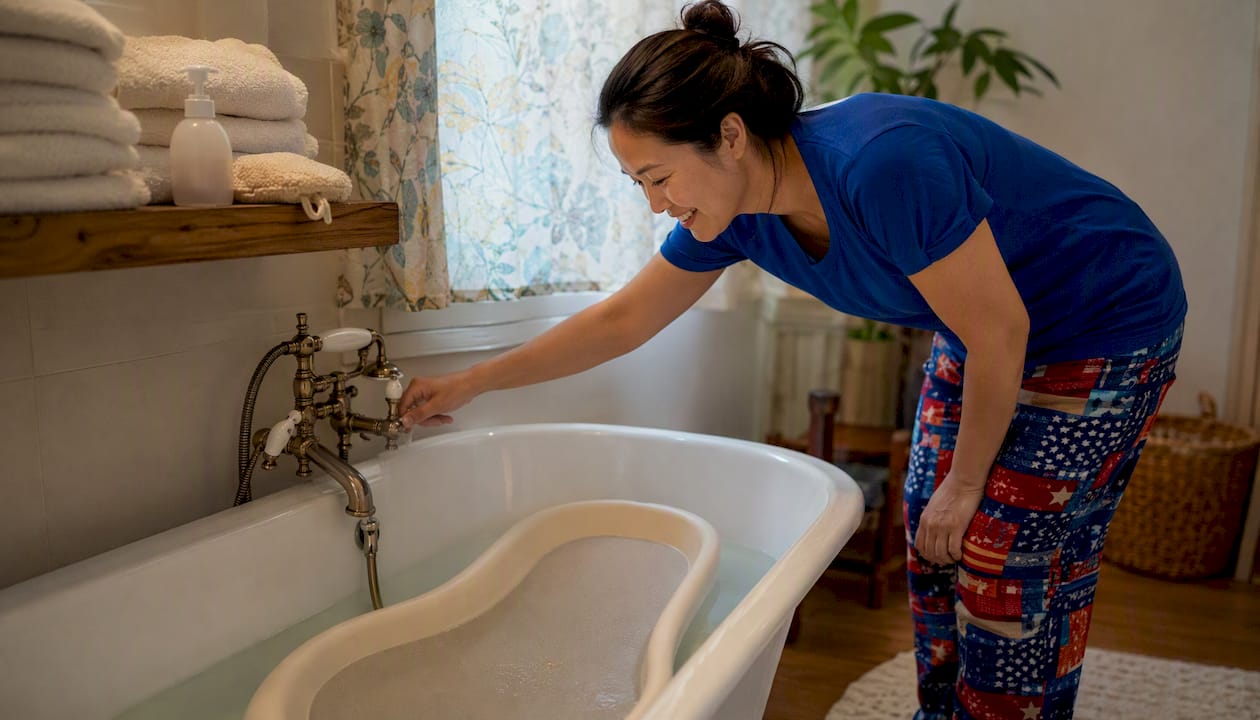
Never use a bath seat as a supervision substitute. Bath seats prevent tipping in one direction but can still tip over, and they give caregivers a false sense that the baby is stable. The AAP’s touch supervision standard applies regardless of what equipment is in the tub.
How to recognize drowning in an infant
Drowning in infants looks nothing like the dramatic scenes in movies. There is no waving, no yelling, and usually no splashing. An infant who is in trouble in water will typically:
Go quiet and still, face down or tilted toward the water.
Have their mouth at or below the water line, unable to call out.
Show a glassy, unfocused expression if briefly above water.
Make no purposeful arm or leg movements to stay afloat.
Because infants cannot swim or tread water, submersion happens fast. By the time a caregiver notices something is wrong, seconds have already passed. This is why visual monitoring from across the room is not enough. Touch supervision, with a hand on the baby, is the only reliable early detection system for infants in water.
If you see any of these signs, act immediately: remove the child from the water, assess responsiveness, and call 911.
Safe water play outside pools and bathtubs
Puddles, sprinkler pads, splash pads, natural springs, and water play tables all carry some level of risk for infants, though the risk profile differs from a pool.
For splash pads and sprinkler areas: stay within arm’s reach and watch for slippery surfaces. Falls near hard edges are as dangerous as the water itself. Check that the facility has a lifeguard or attendant present.
For natural springs and freshwater areas: water temperature, current, and depth can change without warning. Keep infants out of moving water entirely. Springs that look calm on the surface can have strong undercurrents.
For water play tables and sensory bins at home: these are low-risk when supervised, but empty them after use. A toddler who discovers a full water table while unsupervised can submerge their face in seconds.
For puddles and standing water after rain: most puddles are shallow enough to be low-risk, but drainage ditches, flooded low spots, and pooled water near construction sites can be deeper than they appear. Keep infants away from any standing water where depth is unknown.
The rule is consistent across all of these: if water is present, an adult is present and paying attention.
How to communicate water safety rules with other caregivers
Every adult who spends time with your infant near water needs to know your household rules, not just the general idea of them. Grandparents, babysitters, older siblings, and family friends often operate on older assumptions about water safety, and those assumptions can be dangerous.
Have a direct, specific conversation before any caregiver takes over near water. Cover:
The touch supervision rule and what it means in practice.
Which areas of the home and yard are off-limits without a second adult present.
Where the pool gate key is and that it stays locked.
The location of the PFD, reach pole, and emergency numbers.
What to do first if the infant submerges (remove from water, call 911, begin CPR).
Write the rules down and give a copy to every regular caregiver. A laminated card by the pool and one on the fridge removes any ambiguity. When rules are verbal only, they get softened, forgotten, or reinterpreted. When they are posted and specific, they get followed.
What rescue equipment should you keep accessible?
A reach pole (shepherd’s crook), a life ring with a rope attached, and a charged phone should be at every pool, permanently mounted or stored within 10 seconds of the water’s edge. Emergency response experts recommend that these tools be placed where every adult in the household can reach them without searching.
Mount the reach pole on the fence near the gate. Hang the life ring on a hook at the pool’s edge. Keep the phone in a waterproof case or pouch near the pool during any time the pool is in use.
For the bathroom, a charged phone within reach is the critical tool. In a drowning emergency, you need to call 911 without leaving the child.
Check rescue equipment monthly: confirm the rope on the life ring is intact, the reach pole is not cracked, and the phone is charged. Equipment that is damaged or dead is no better than no equipment at all.
Key Takeaways
Effective protection against infant drowning requires combining supervision, physical barriers, rescue equipment, and trained caregivers, because no single measure is sufficient on its own.
Point | Details |
Touch supervision is non-negotiable | Keep one hand on your infant at all times near water, including bathtubs with only 2–3 inches of water. |
Four-sided fencing is the top pool strategy | A self-closing, self-latching fence at least 4 feet high is the most researched effective pool barrier for young children. |
Inflatable devices are not life jackets | Only USCG-approved PFDs meet federal safety standards; water wings and rings are toys, not safety equipment. |
CPR training saves lives | Every adult caregiver should complete a certified infant CPR course through the American Red Cross or American Heart Association. |
Superheroswimacademy adds a critical layer | CPR-certified instructors and a survival swim curriculum in Palm Beach and Broward counties give families a structured, safety-first program to build on. |
Why layered safety and professional training change outcomes
Most drowning tragedies share a common thread: one layer of protection was missing or failed, and there was nothing behind it. A gate left open. A caregiver who stepped away for 90 seconds. A child who had taken swim lessons but was placed in water without supervision because the family assumed lessons were enough.
The families who consistently avoid these outcomes are not the ones who did one thing right. They are the ones who built redundancy. They fenced the pool and locked the gate and designated a water watcher and kept a reach pole at the edge and enrolled their child in lessons with a certified instructor. When one layer slipped, another held.
Professional instruction matters not just for what children learn, but for what parents learn alongside them. A qualified instructor who carries CPR certification and follows a structured safety curriculum teaches parents to see water hazards differently, to respond faster, and to maintain the habits that keep layers in place over time. That is a different outcome than a summer of casual pool visits.
Superheroswimacademy: survival swim lessons built around safety
When you are ready to add professional instruction to your layers of protection, Superheroswimacademy offers exactly what parents in Palm Beach and Broward counties need: CPR-certified instructors, a structured survival swim curriculum, and flexible formats that fit your family’s schedule.
Every Superheroswimacademy instructor holds current CPR and First Aid certification and follows the academy’s own proven survival swim curriculum. With over 2,500 children taught, the program offers private lessons at your home, small group classes in heated pools, parent-and-child sessions, and luxury concierge instruction for families who want one-on-one attention. For caregivers who want to build skills between lessons, online parent training courses are available as well.
The difference between a swim program and a safety program is the curriculum. Superheroswimacademy’s focus is on water response and self-rescue skills, not lap times. Parents receive clear progress updates so they know exactly what their child is working toward. To book a consultation or reserve a spot in a local class, visit Superheroswimacademy and take the next step toward a complete, layered safety plan for your family.
Authoritative sources and where to learn more
The guidance in this article draws from the following authoritative resources. Each one offers deeper reading on specific aspects of child water safety:
AAP Drowning Prevention and Water Safety — Practitioner-facing guidance on swim lesson recommendations and developmental readiness.
WHO: Drowning Prevention — The World Health Organization’s layers-of-protection framework for drowning prevention globally.
CDC: Preventing Drowning — U.S.-focused prevention data and public health guidance from the Centers for Disease Control and Prevention.
StatPearls: Pool Safety (NCBI) — Peer-reviewed clinical review of pool fencing research, gate specifications, and supplemental safety measures.
PMC: Infant Drowning Prevention — Ecological Psychology Approach — Peer-reviewed research on the relationship between infant motor development and drowning risk.
For CPR certification, contact the American Red Cross or the American Heart Association directly for in-person infant CPR courses in your area. Your pediatrician can also provide personalized guidance on swim readiness and local program recommendations.
This article provides general safety information, not medical or legal advice. Confirm current guidelines with your pediatrician or a certified water safety professional.
Recommended
Comments