
Survival Swim Lessons San Diego: Safety Guide for Parents
- superheroswim
- Aug 3
- 3 min read

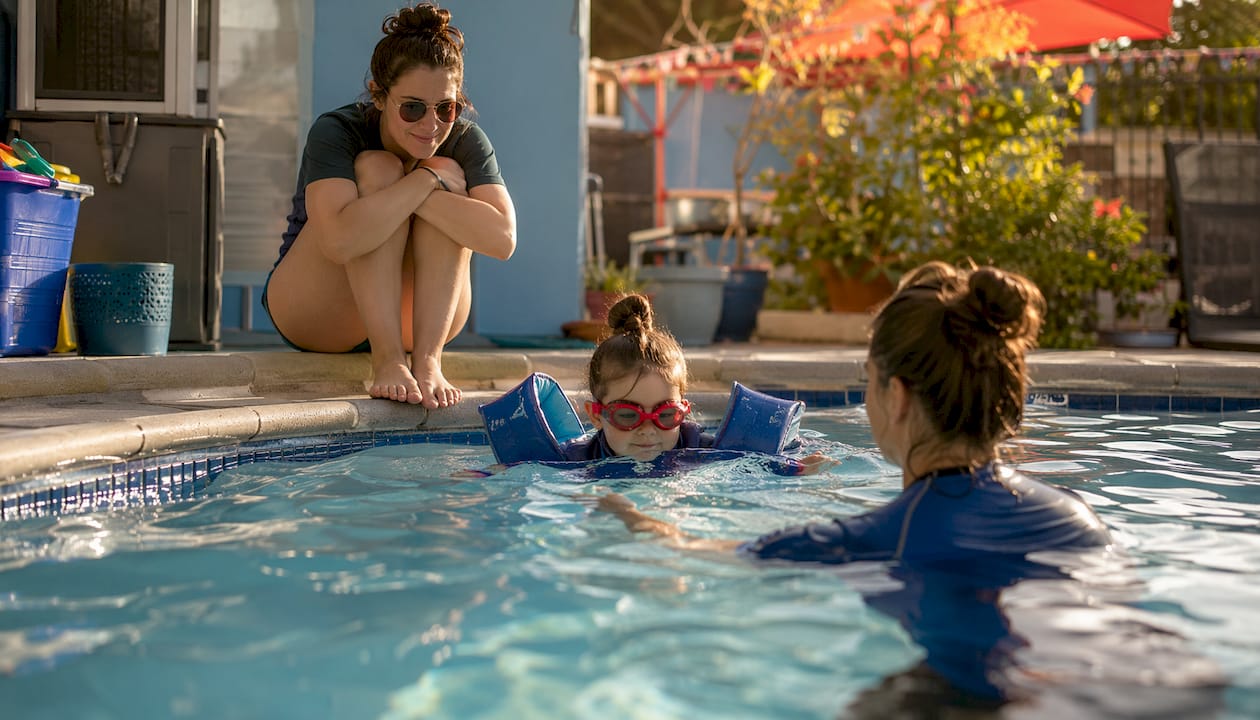
The single most important thing to look for in swimming lessons in San Diego is a survival-first curriculum taught in a heated indoor pool by instructors certified in CPR, First Aid, and survival-swim methods. Everything else is secondary.
Before you call a single program, run through this checklist:
Survival-focused curriculum: Ask specifically whether lessons teach floating, self-rescue, and roll-to-float techniques, not just stroke mechanics.
Heated indoor pool: Water kept near 90°F keeps infants and toddlers comfortable and engaged year-round.
Low student-to-instructor ratio: One-on-one or small groups of three to four children maximum for survival-skill work.
Instructor certifications: CPR, First Aid, and documented survival-swim training are non-negotiable. Red flags to watch include programs that cannot name their certification body.
Pre-assessment: City-run programs require a pre-assessment before placement, and any quality private program should too.
Class types available: Parent-and-child sessions, private lessons, and small-group options should all be on the menu.
Most families see meaningful progress within several weeks of consistent sessions. Packages typically run in several-lesson blocks. Long-term, year-round participation beats short crash courses for retaining life-saving skills.
Pro Tip: Before enrolling, ask the program to show you a short video or live demo of a survival drill. Any confident instructor will say yes immediately.
Table of Contents
Why pool temperature matters for infant swim lessons in San Diego
Infants and toddlers cannot regulate body temperature the way older children can. A pool kept near 90°F prevents shivering, keeps attention spans intact, and makes it far easier for a child to focus on the actual skill being taught. Heated indoor pools at that temperature also allow year-round scheduling, which matters because consistent, long-term participation produces better retention of survival skills than seasonal programs. An outdoor pool in San Diego may feel warm in July, but it is rarely warm enough for a six-month-old in February. Climate-controlled indoor facilities remove that variable entirely.
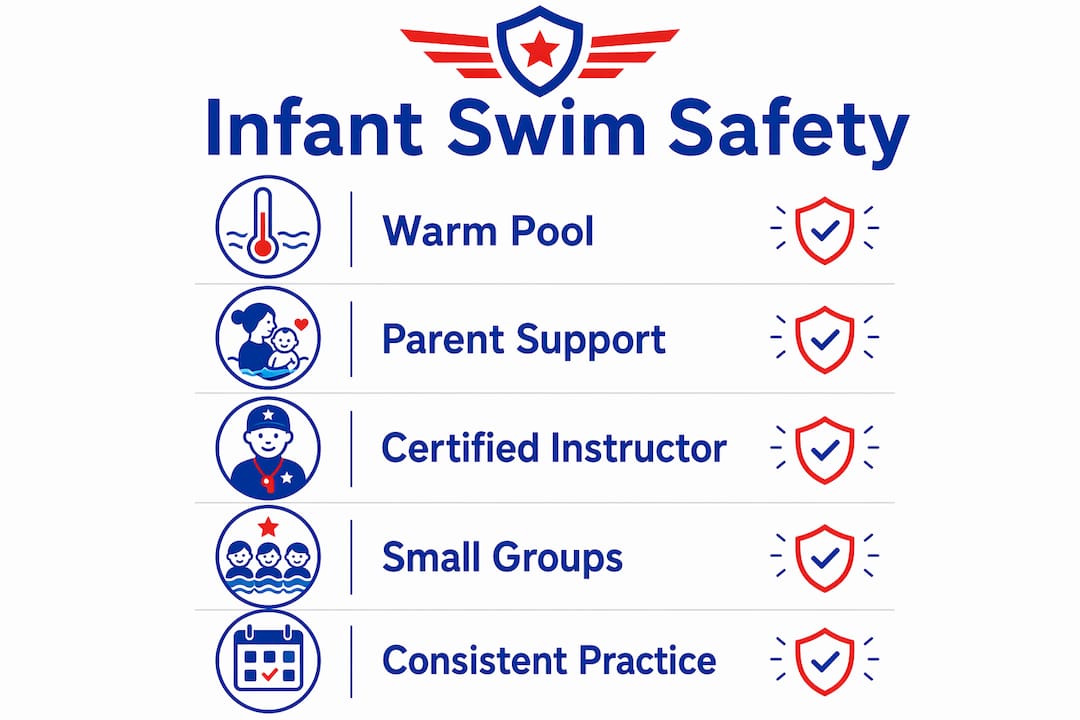
Parent-and-child classes, which typically serve children from about 2 to 36 months, depend especially on warm water. When a parent is in the pool alongside their infant, both need to stay comfortable long enough to build real trust and motor patterns.
Trusted survival swim programs serving the San Diego area
The YMCA of San Diego County operates branches throughout the county with nationally certified instructors trained in CPR, AED, First Aid, and Oxygen Administration. They offer private and small-group lessons across skill levels, track student progress, and share reports with parents. Locations include Rancho Bernardo, Mission Valley, and Chula Vista, among others.
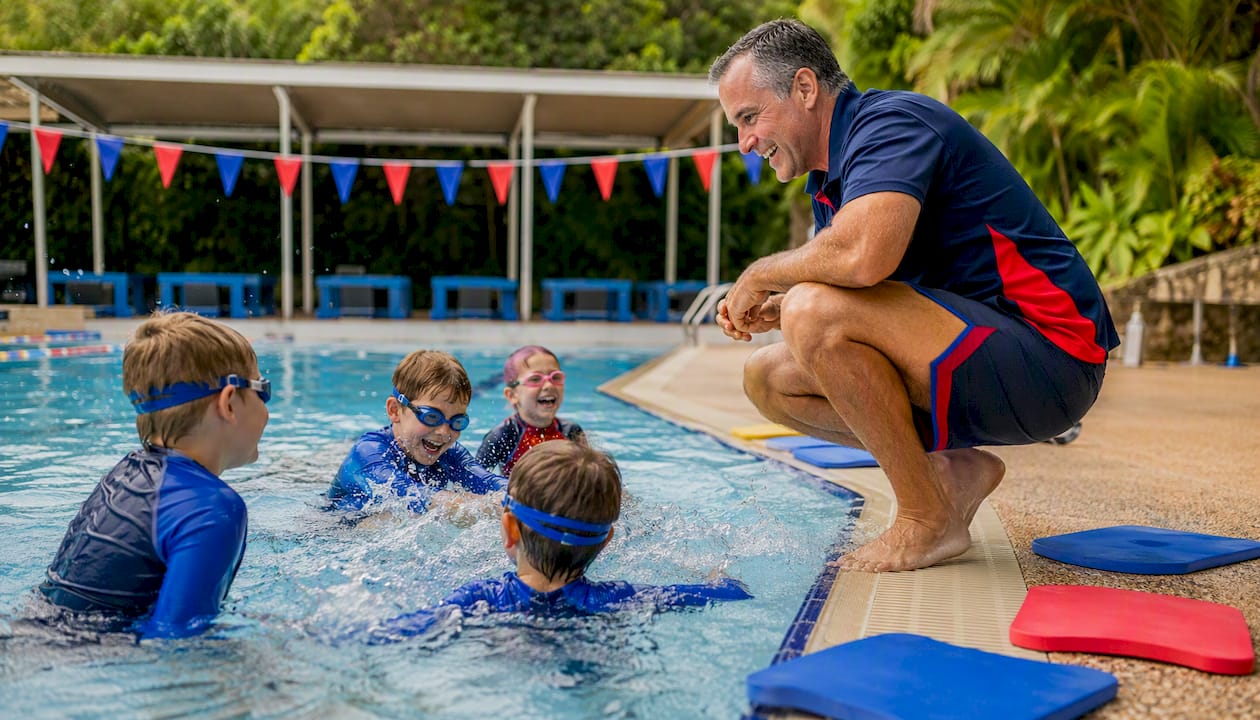
For families specifically focused on infant survival skills, private lessons accelerate progress faster than large group formats when survival is the priority, not just stroke development.
Superheroswimacademy serves Palm Beach and Broward parents with a survival-first approach
If you are in Palm Beach or Broward County, Superheroswimacademy delivers exactly what the checklist above describes. Every instructor holds CPR and First Aid certification and completes the academy’s own survival-swim curriculum training. The program has taught over 2,500 children, and parents receive regular progress updates with clear goals at every stage.
Services include parent-and-child sessions, infant survival classes, toddler small-group lessons, private in-pool instruction, in-home concierge lessons, and online courses for parents who want to reinforce skills between sessions. Pools are heated and indoor. Ratios stay low. The focus never drifts from survival skills first.
Book a trial lesson or pre-assessment at Superheroswimacademy to get your child placed correctly from day one.
Key Takeaways
A survival-first program with a heated indoor pool, certified instructors, and low student-to-instructor ratios gives infants and toddlers the safest, fastest path to water competency.
Point | Details |
Survival curriculum first | Confirm lessons teach floating and self-rescue, not just strokes, before enrolling. |
Pool temperature matters | Indoor pools near 90°F keep infants comfortable and focused throughout every session. |
Pre-assessment is standard | Quality programs place children by skill level before the first lesson, reducing safety risk. |
Consistent enrollment wins | Long-term, year-round participation retains life-saving skills better than short intensive courses. |
Superheroswimacademy | Serves Palm Beach and Broward with certified instructors, heated pools, and 2,500+ children taught. |
Recommended
Comments