
Why Group Swim Classes Build Confidence in Kids
- superheroswim
- Jun 6
- 7 min read

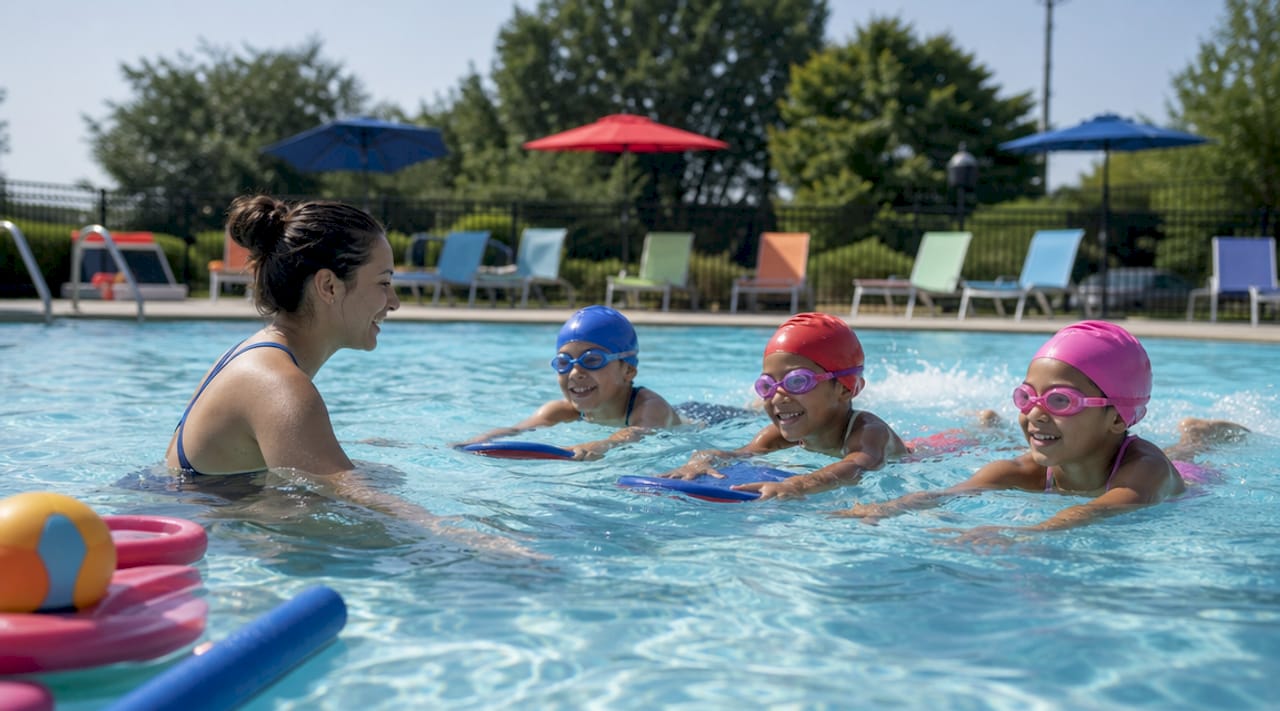
Group swim classes build children’s confidence by placing them inside a shared learning environment where skill mastery and social connection reinforce each other simultaneously. Unlike solo practice or private lessons, the group format gives children something powerful: proof that progress is possible, delivered in real time by the kids swimming right next to them. At Superheroswimacademy, we have watched this transformation happen with over 2,500 children across Palm Beach and Broward counties. The psychological mechanism is straightforward. Competence fuels confidence, and group classes accelerate competence by layering peer motivation on top of structured instruction.
Why group swim classes build confidence differently than private lessons
Group swim classes produce a specific kind of confidence that private lessons rarely replicate: social proof. When a child watches a peer their own age push off the wall and float independently, the mental barrier shifts from “I can’t do that” to “she just did it, so maybe I can too.” Peer observation empowers children to believe progress is possible in a way that instructor encouragement alone cannot.
Private lessons are excellent for targeted skill correction and faster technical progress. But they place the child in a one-on-one spotlight that can amplify anxiety, especially for kids who already feel uncertain about water. The group format distributes that pressure. No single child is the center of attention for the entire session, which reduces performance anxiety and creates space for low-stakes attempts.
The group setting also introduces healthy, cooperative competition. Children notice when a classmate masters a new skill, and that observation creates natural motivation to try harder. This is not pressure. It is inspiration delivered through proximity.
Shared learning reduces the isolation that makes fear grow
Watching peers succeed motivates new swimmers and normalizes struggle
Group dynamics create accountability without judgment
Cooperative goals replace individual performance pressure with team momentum
Pro Tip: If your child freezes up during private lessons, a small group class of three to five kids often breaks that pattern within two to three sessions. The social energy shifts the focus away from the child’s own fear.
What role does social interaction play in building water familiarity?
Water anxiety is one of the most common barriers children face when learning to swim, and social interaction is one of the most effective tools for dissolving it. Consistent routines in group lessons reduce anxiety by creating a stable, predictable environment where children know what comes next. Familiarity with the routine transfers directly into familiarity with the water.
Here is how the social layer of group classes builds water comfort step by step:
Shared entry rituals. When every child enters the pool together, the act of getting in stops feeling like a personal test and starts feeling like a group activity. The social norm of “we all do this” overrides individual hesitation.
Peer encouragement during drills. Children cheer for each other during kick drills and breath work. That encouragement from a classmate carries different weight than praise from an adult because it comes without authority or expectation.
Predictable warm-up sequences. Repeating familiar warm-ups and drills creates a stable learning environment where children can focus on skills rather than managing surprise or uncertainty.
Emotional co-regulation. When one child laughs through a wobbly float attempt, the group laughs together. That shared reaction normalizes imperfection and builds emotional resilience that carries beyond the pool.
The result is that children stop experiencing water as a threat and start experiencing it as a familiar place where good things happen with friends. This shift in perception is the foundation of genuine water confidence, not just technical swimming ability.
How do incremental challenges in group classes sustain confidence growth?
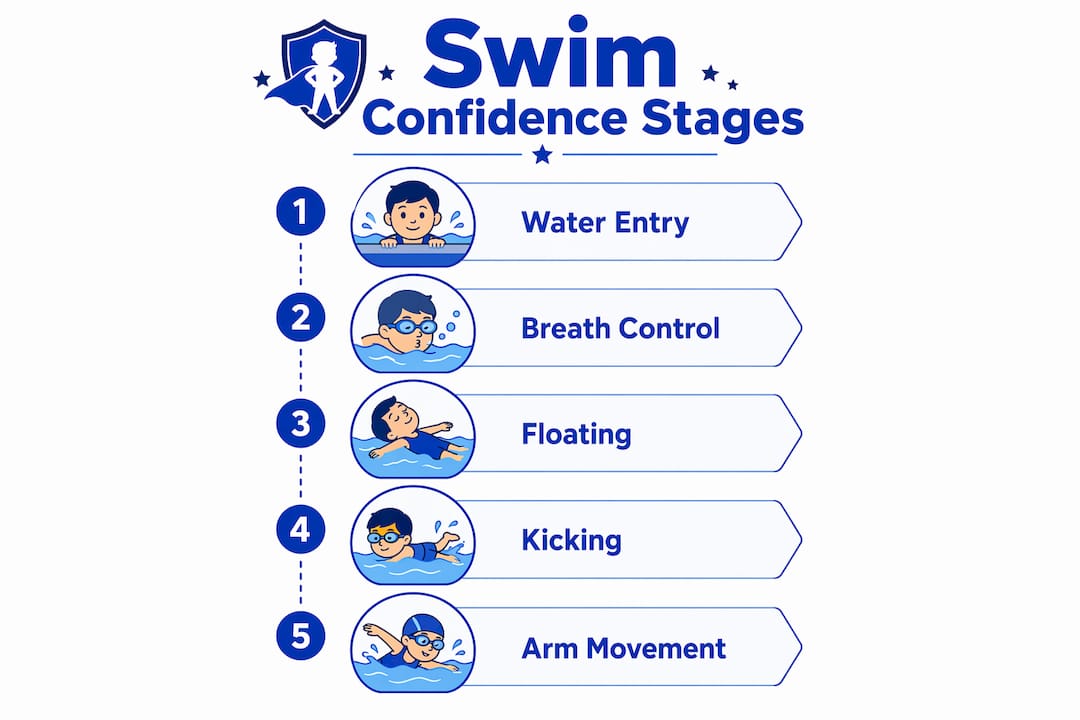
Confidence is the gradual replacement of uncertainty with familiarity through repeated, manageable challenges. That definition, drawn from structured incremental teaching, explains exactly why well-designed group swim programs produce lasting self-assurance rather than short-term bravery.
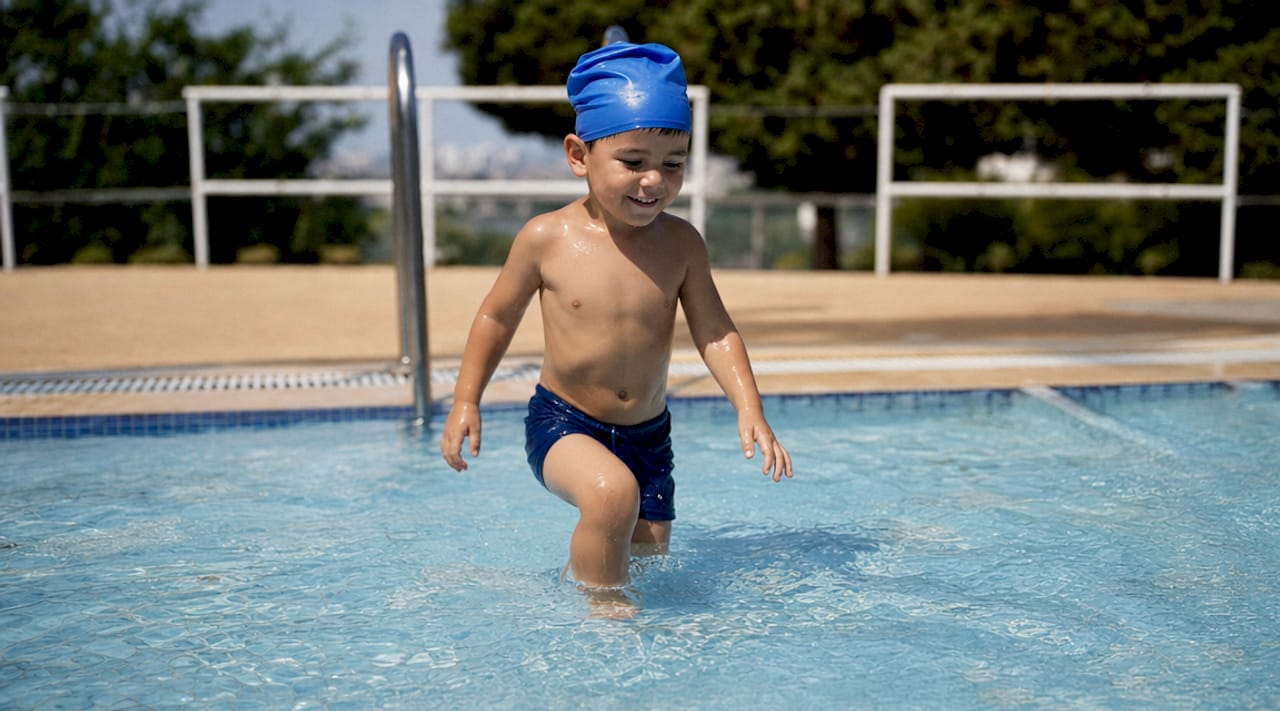
Skilled instructors break every skill into the smallest possible step. Before a child learns freestyle, they learn to blow bubbles. Before they learn to float, they learn to hold the wall and feel the water support their legs. Each micro-success deposits a small amount of trust into the child’s belief in their own body. Over weeks, those deposits accumulate into real confidence.
Stage | Skill focus | Confidence outcome |
Week 1 to 2 | Water entry and breath control | Reduces fear of submersion |
Week 3 to 4 | Assisted floating and kicking | Builds trust in water buoyancy |
Week 5 to 8 | Independent movement and arm strokes | Creates “I can do it” moments |
Week 9 to 12 | Combined strokes and distance | Produces pride and competence |
Research confirms that children in consistent swim instruction show better school performance and behavior after 12 weeks. That timeline matters because it aligns with the point at which incremental challenges have stacked into genuine mastery. The confidence children feel at week 12 is not manufactured. It is earned.
Pro Tip: Ask your child’s instructor to name one specific skill your child mastered this week. Naming the win out loud at home reinforces the competence loop and accelerates the confidence-building process.
How do group swim classes build social skills that extend beyond the pool?
The benefits of group swimming lessons impact children well past the water’s edge. Swimming builds communication abilities and social confidence within group settings, with children learning to share space, take turns, listen to instructions, and cheer for peers. These are the same skills that show up in classrooms, on playgrounds, and in team sports.
Group swim classes are one of the few structured activities where children of similar ages practice cooperation without a competitive outcome attached. There is no winner of a swim lesson. The shared goal is progress, and that framing teaches children to celebrate others’ success as genuinely good news rather than a personal threat.
Children develop active listening by following multi-step instructor directions in a noisy pool environment
Turn-taking during drills builds patience and respect for peers
Teamwork and cooperation in group classes translate directly into sportsmanship and social confidence outside the pool
Positive social experiences in the water reinforce self-esteem in ways that transfer to school and home settings
Research from child development specialists at Astor Education confirms that small class environments produce stronger social-emotional outcomes than large group settings, which is why programs like Superheroswimacademy keep class sizes intentionally small. The intimacy of a small group means every child is seen, every attempt is noticed, and no child can quietly disappear into the background.
The social skills children develop in group swim classes are not a side effect. They are a core outcome. A child who learns to encourage a nervous classmate in the pool is practicing empathy. A child who waits their turn at the wall is practicing self-regulation. These are the building blocks of confidence in every area of life.
Key takeaways
Group swim classes build lasting confidence by combining skill mastery, peer motivation, and structured social interaction in a single, repeatable learning environment.
Point | Details |
Peer motivation accelerates progress | Watching classmates succeed reduces fear and inspires children to attempt new skills faster. |
Routine reduces water anxiety | Consistent warm-ups and predictable drills replace uncertainty with familiarity over time. |
Incremental challenges build real competence | Small, stacked skill milestones create genuine “I can do it” confidence by week 12. |
Social skills transfer beyond the pool | Communication, turn-taking, and sportsmanship learned in group classes carry into school and daily life. |
Instructor attitude shapes outcomes | Supportive, patient coaching that adjusts pacing to each child is the difference between fear and confidence. |
What I have seen after teaching thousands of kids to swim
After working with more than 2,500 children at Superheroswimacademy, the moment I find most telling is not when a child swims their first lap. It is when a child who was terrified of the water turns to a newer classmate and says, “You’ve got this. I was scared too.” That sentence is the whole story of why group swim classes build confidence in a way that nothing else quite replicates.
Private lessons have their place, and we offer them. But the children who develop the deepest, most durable confidence are almost always the ones who went through a group experience. They did not just learn to swim. They learned that they could face something hard, do it alongside other people, and come out the other side capable. That lesson generalizes. I have had parents tell me their child started raising their hand in class, trying out for soccer, or asking to join a new club, all within weeks of hitting a major swim milestone.
The piece of advice I give every parent who is hesitant about group classes is this: your child does not need to be ready. The group will help them get ready. The social environment does work that no amount of one-on-one coaching can replicate, because it shows children that courage is contagious. You can read more about what parents should know before enrolling in a small group program if you want the full picture before you decide.
— SUPERHERO
Give your child the confidence that starts in the water
At Superheroswimacademy, our group swim lessons are built around the exact progression described in this article: small class sizes, certified instructors trained in CPR and First Aid, and a curriculum designed to move children from fear to mastery in measurable steps. We serve families across Palm Beach and Broward County locations, and every parent receives regular updates on their child’s specific skill milestones.
If you are not near one of our locations, our online swim courses give you structured, expert-guided options to support your child’s water confidence at home. Whether you start in the pool or on a screen, the goal is the same: a child who trusts themselves in the water and carries that trust everywhere else. Enroll your child today and see the difference a structured, supportive group environment makes.
FAQ
Why do group swim classes build more confidence than solo practice?
Group classes provide peer motivation and social proof that solo practice cannot replicate. Watching classmates overcome the same fears makes children believe their own progress is possible, which accelerates both skill development and self-assurance.
How long does it take for group swim lessons to build confidence?
Research shows children in consistent swim instruction show measurable behavioral and developmental improvements after 12 weeks. Most children begin showing visible confidence gains, such as independent water entry and willingness to try new skills, within the first four to six sessions.
What age is best to start group swim classes for confidence building?
Children as young as toddler age benefit from group swim exposure, with early swim lessons supporting key developmental milestones. The earlier a child builds water familiarity in a social setting, the more natural and confident their relationship with water becomes.
Can group swim classes help a child who is afraid of water?
Group classes are particularly effective for water-anxious children because the social environment normalizes fear and distributes attention. Seeing peers enter the water calmly, combined with consistent routines, replaces anxiety with familiarity faster than individual instruction typically achieves.
Do the social skills from group swim lessons carry into everyday life?
Swimming builds communication, turn-taking, and sportsmanship that transfer directly to school and home settings. Parents regularly report improvements in their children’s cooperation and self-esteem in non-swimming contexts after consistent group class participation.
Recommended
Comments