
How Swim Curriculum Works for Children: A Parent's Guide
- superheroswim
- Jun 18
- 8 min read

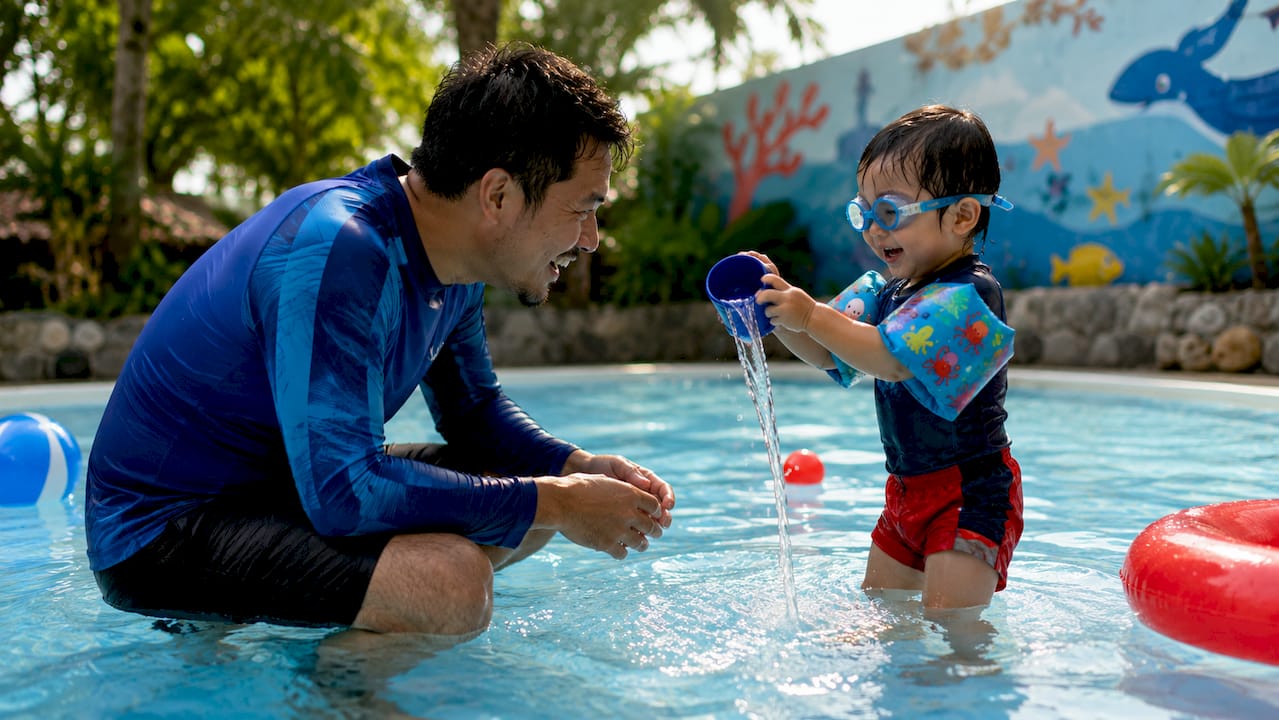
A swim curriculum for children is a structured, age-specific program that builds water safety skills and swimming technique through sequential stages from infancy through school age. Programs like those offered by Superheroswimacademy and standards recommended by HealthyChildren.org share a common framework: start with water acclimation, progress through survival skills, and advance to refined stroke technique. The stakes are real. Formal swim lessons can reduce drowning risk by up to 88% for children aged 1–4. That single statistic explains why understanding how swim curriculum works for children matters far more than most parents realize.
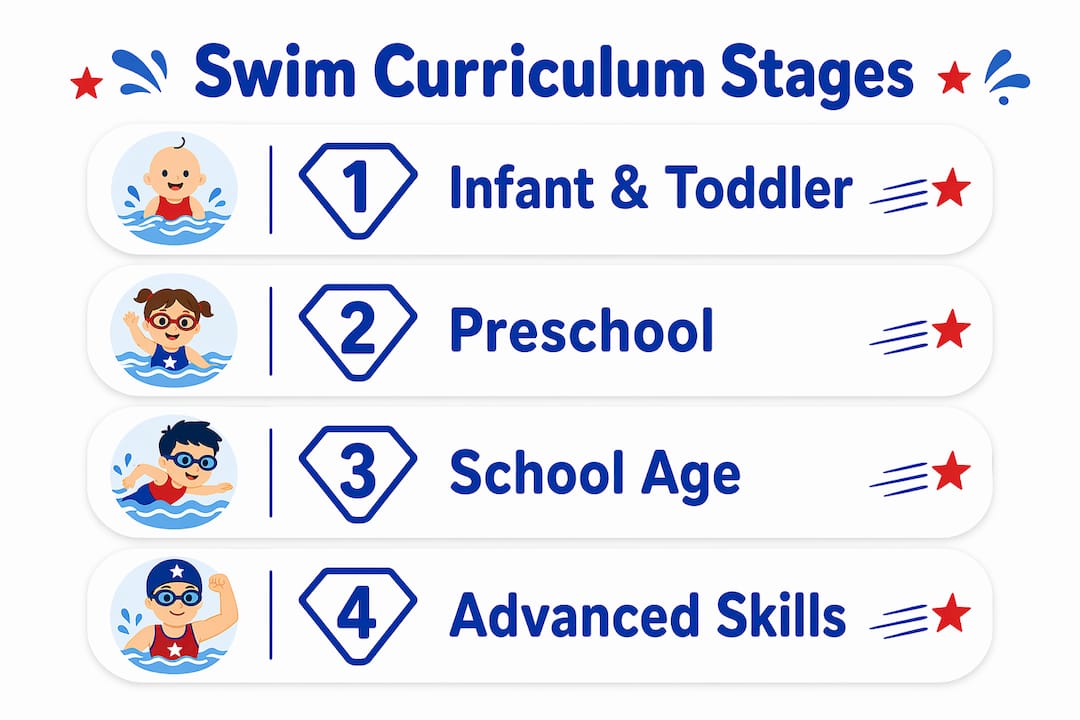
What are the stages of a children’s swim curriculum?
A well-designed swim curriculum follows a clear developmental arc. Each stage builds on the last, so skipping a phase creates gaps that show up later as fear or poor technique.
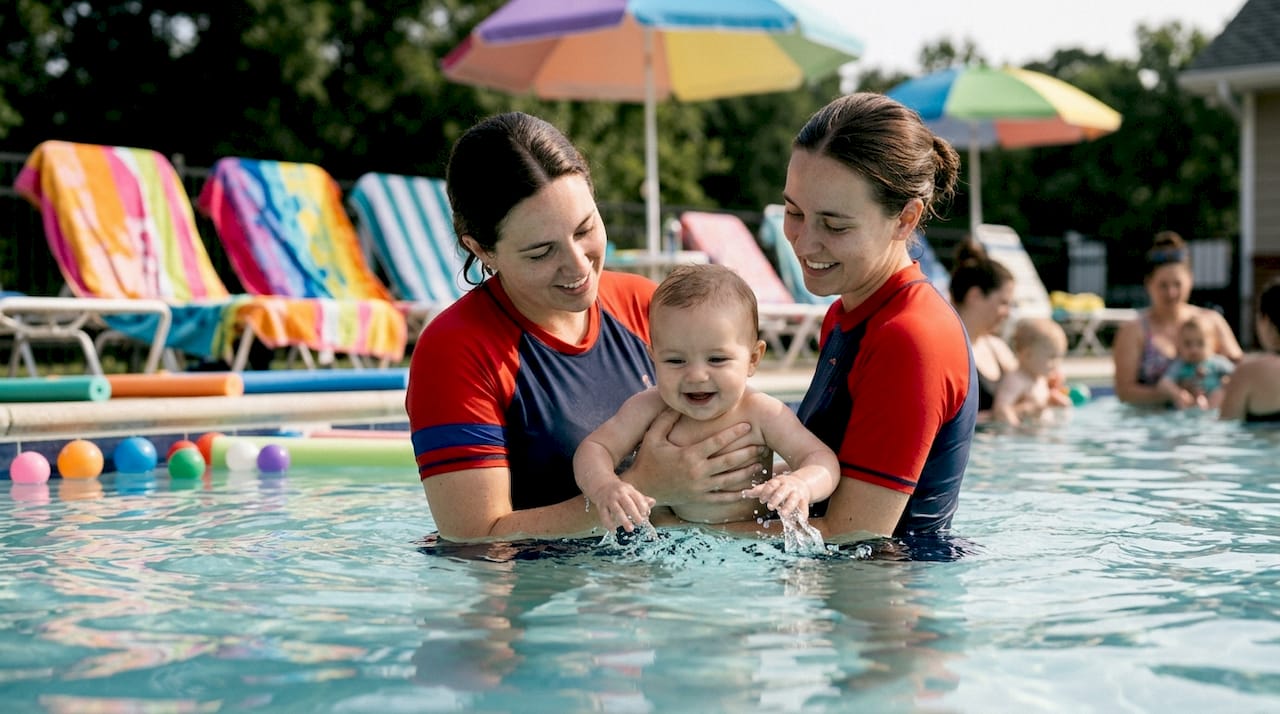
Stage 1: Infant and Toddler (Ages 0–2) Parent-accompanied classes dominate this phase. The goal is not lap swimming. It is water comfort, breath control, and basic floating. Instructors guide parents through supported submersions, back floats, and gentle kicking drills. The child learns that water is safe and predictable.
Stage 2: Preschool (Ages 3–6) This is where structured skill sessions begin. Preschool swim programs typically run 30–45 minutes per class, balancing technical instruction with games. Children practice independent floating, basic arm strokes, and wall grabs. Survival skills enter the picture here, including rolling from a face-down position onto the back to rest and breathe.
Stage 3: School Age (Ages 6 and Up) Children refine stroke mechanics, build endurance, and practice more complex water safety scenarios. Butterfly, backstroke, and breaststroke are introduced alongside open-water awareness concepts.
Throughout every stage, small class sizes are non-negotiable. A recommended maximum ratio of 4–6 children per instructor for preschool-age classes keeps every child visible and every correction timely. That ratio is not a preference. It is a safety standard.
Water acclimation games build comfort before any technical skill is introduced
Floating and breath control are taught before forward propulsion
Wall grabs and pool exit skills are practiced from the first lesson
Survival rolls and back floats are repeated until automatic
Stroke refinement and endurance come last, not first
Pro Tip: Ask any program you are considering what their exact instructor-to-child ratio is for your child’s age group. If they cannot answer immediately, that tells you something important about how they run their classes.
How does a swim curriculum balance safety and technique?
The most effective children’s swim programs treat safety education and stroke technique as equally important, not as separate tracks. A child who swims beautifully but panics when they fall in fully clothed is not water safe. That is the distinction that separates a strong curriculum from a basic one.
Curricula that simulate realistic conditions increase children’s preparedness and water competency. This means lessons include drills where children practice swimming in clothes, recovering from an unexpected entry, and rolling onto their back to float and rest before swimming to safety. These are not dramatic exercises. They are practiced calmly and repeatedly until the child’s response becomes instinctive.
“The goal of a quality swim curriculum is not to produce competitive swimmers. It is to produce children who can survive an unexpected encounter with water and get themselves to safety.”
Instructor qualifications are the backbone of this balance. Certified, CPR-trained instructors with a lifeguard present during lessons create the safety net that allows children to take risks in the water without real danger. At Superheroswimacademy, every instructor completes rigorous CPR and First Aid training alongside the academy’s own survival swim curriculum before teaching a single class.
The behavioral side of safety is equally deliberate. Water safety habits like never swimming alone and always asking an adult before entering water are woven into every lesson, not tacked on at the end. Children hear these rules so consistently that they become automatic responses, not rules they have to remember.
Structured vs. informal swimming: what the comparison shows
The benefits of a structured swim curriculum for kids become clearest when you compare them directly to informal or unmonitored swimming. Backyard pool time and lake visits have value, but they do not replace a sequenced program.
Feature | Structured Curriculum | Informal Swimming |
Skill progression | Developmentally sequenced stages | Random, dependent on child’s interest |
Safety instruction | Built into every session | Rarely systematic |
Instructor qualifications | Certified, CPR trained | None required |
Progress tracking | Regular feedback and goal setting | No formal measurement |
Class size control | Max 4–6 children per instructor | Unmonitored |
Survival skill practice | Repeated drills in realistic scenarios | Uncommon |
Behavioral expectations | Consistent routines and rules | Inconsistent |
Developmentally sequenced curricula adapted from infancy through school age produce measurably better skill acquisition than unstructured exposure. The reason is simple. Children learn motor skills through repetition in a controlled sequence. Jumping straight to freestyle without mastering floating first creates anxiety and poor mechanics that take years to correct.
Consistent lesson routines and progress tracking are critical for skill mastery in swim education. Parents who receive regular updates on their child’s progress stay engaged, which reinforces learning at home. Programs that skip this feedback loop leave parents guessing and children without accountability.
Pro Tip: Look for programs that give you written or digital progress reports after each session or skill level. Verbal updates at pickup are easy to forget. Written goals create a record you can act on.
Understanding lesson frequency best practices is just as important as choosing the right program. Two lessons per week consistently outperforms one lesson per week for children under age six, because the skill consolidation window in young children is short.
How group swim curriculums build behavior and confidence
Group swim classes do more than teach children to swim. They teach children how to learn in a structured environment, which is a skill that transfers directly to school readiness and social development.
Small group sizes create peer accountability. When a child sees a classmate successfully float independently, the motivation to try increases. This peer modeling effect is well-documented in early childhood education and applies directly to aquatic settings.
Structured routines reduce anxiety. Toddlers and preschoolers thrive on predictability. A class that starts with the same song, moves through the same skill sequence, and ends with the same game gives children a mental map of what to expect. That predictability lowers resistance and increases participation.
Positive reinforcement builds intrinsic motivation. Repetitive practice combined with positive reinforcement and engaging activities builds both physical skills and behavioral confidence. Instructors who celebrate effort over outcome teach children that persistence matters more than perfection.
Clear behavioral expectations set the tone. Toddler swim class behavioral expectations are not punitive. They are structural. Rules like “wait your turn,” “listen when the instructor speaks,” and “keep your hands to yourself in line” are practiced every class. Children internalize them quickly because the consequences are immediate and consistent.
Private lessons serve a specific purpose. When a child has significant fear, a developmental delay, or needs to catch up to a peer group, one-on-one instruction provides the individualized pacing that group classes cannot. Many families use private lessons as a bridge before transitioning to group settings.
Group swim classes build confidence through socialization and behavioral expectations in ways that solo instruction simply cannot replicate. The social dimension of learning to swim is not a bonus. It is part of the curriculum.
Key takeaways
A structured swim curriculum is the single most effective tool for building water safety and swimming competence in children from infancy through school age.
Point | Details |
Age-staged progression | Curricula move from water acclimation in infancy to stroke refinement in school age, in sequence. |
Survival skills are non-negotiable | Quality programs teach children to float, roll, and swim clothed before refining stroke technique. |
Class size determines safety | A maximum ratio of 4–6 children per instructor is the standard for preschool-age swim classes. |
Structured beats informal | Sequenced lessons with certified instructors produce measurably better outcomes than unmonitored pool time. |
Group classes build more than swim skills | Behavioral expectations, peer modeling, and routine in group settings support social and cognitive development. |
What i’ve learned after teaching thousands of children to swim
After working with over 2,500 children at Superheroswimacademy, the pattern I see most often is this: parents underestimate the importance of the foundational stages and overestimate the value of speed. Families sometimes push to skip the floating and acclimation phase because their child seems comfortable in the water. That comfort is not the same as competency. The children who skip foundational stages are the ones who freeze when they fall in unexpectedly, because their comfort was always conditional on controlled conditions.
The second thing I have learned is that parental involvement changes outcomes. Programs that keep parents informed, set clear goals, and explain the “why” behind each drill produce children who practice between lessons and retain skills longer. A parent who understands that the back float drill is a survival skill, not a warm-up exercise, will reinforce it differently at the pool on weekends.
The third observation is harder to say but worth saying. Not every swim program is built around safety first. Some are built around volume, throughput, and keeping classes full. You can spot the difference by asking two questions: What is your instructor-to-child ratio for my child’s age? and What survival skills will my child learn, and when? If the answers are vague, keep looking. The right program will answer both questions immediately and specifically.
Qualified swim instructors are not interchangeable with enthusiastic swimmers who like kids. Certification, CPR training, and curriculum-specific preparation are the floor, not the ceiling.
— SUPERHERO
Start your child’s swim journey with Superheroswimacademy
Superheroswimacademy serves families across Palm Beach and Broward counties with a survival swim curriculum built on exactly the principles this article covers: age-specific stages, certified instructors, small class sizes, and consistent parent communication.
Every instructor at Superheroswimacademy holds CPR and First Aid certification and completes the academy’s own proven curriculum training before teaching. Parents receive regular progress updates so you always know where your child stands and what comes next. With over 2,500 children taught, the results speak for themselves. Explore swim lesson programs and find the right fit for your child’s age and skill level. You can also check available locations near you to get started.
FAQ
What age should a child start a swim curriculum?
Most structured swim curricula accept children starting at 6 months old in parent-accompanied classes. HealthyChildren.org recommends formal swim lessons for most children beginning at age 1.
How long does it take for a child to learn basic water safety skills?
Most children in consistent, structured programs develop foundational survival skills like floating and wall grabs within 4–8 weeks of regular lessons. Frequency matters as much as program quality.
How do group swim classes handle tantrums or resistant behavior?
Instructors use structured routines, positive reinforcement, and predictable transitions to minimize resistance. Most toddler resistance decreases significantly after the second or third class once the child understands what to expect.
What is the ideal class size for a toddler swim class?
A maximum ratio of 4–6 children per instructor is the recommended standard for preschool-age swim classes, according to safety guidelines from programs reviewed by Skoolopedia.
How is a structured swim curriculum different from recreational pool time?
A structured curriculum follows a developmental sequence with certified instructors, survival skill drills, and progress tracking. Recreational pool time builds comfort but does not systematically teach safety or technique.
Recommended
Comments